Part 2 – Diesel D:CODE for Successful living and 40X40 = Rolex

* 3 min bold read

We spotted a nice boutique. A very nice boutique. I hesitantly walked inside, and my eyes were instantly transfixed on a pair of shoes. It was the first time I came to understanding how women feel about shoes. These were Roberto Botticelli’s. Absolute beauties! They lit the torch of my burning impulsive desire to rise in the social hierarchy of attention.

In their decadence, artistic white spots dazzled atop of hand-made pure black leather shoes – a magnet for attention. The shoes were begging to be touched. Every drop of white paint seduced my feet, making my toes curl up and salivate for the warmth of the provocative shoes. It is ironic how in this very moment, I finally understood the beauty of hand-crafted items that women go gaga over – especially a simple pair of shoes. I was able to finally appreciate the amount of care that was put into stitching these shoes together. All my life, I was adamantly against the idea of buying expensive shoes for the very simple reason that they were just shoes. But these Roberto Botticelli’s, albeit astronomical in price, instantly transformed my way of thinking. They dared me to jettison my old perception against lavish consumerism.
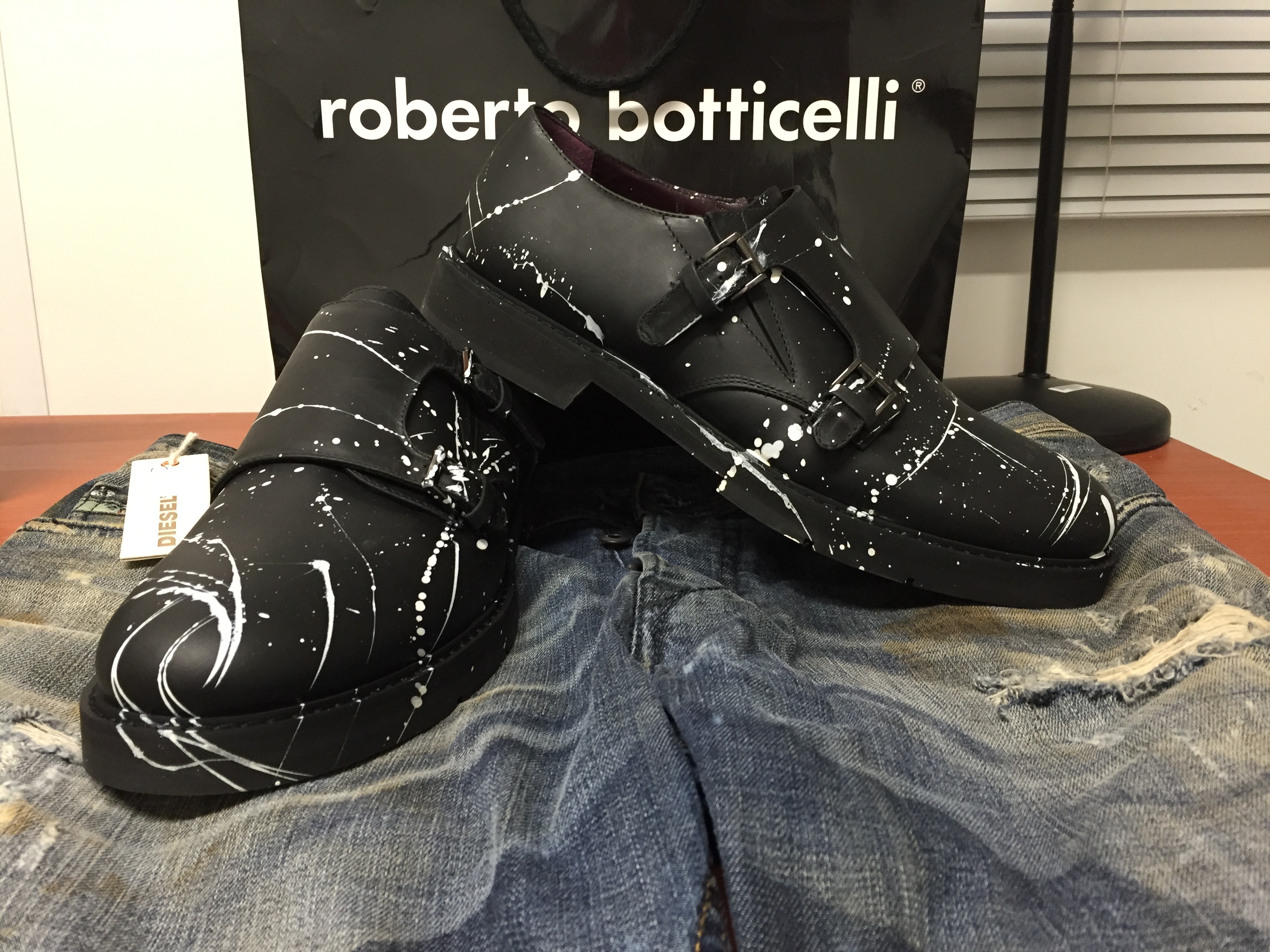
Roberto Botticelli and Diesel

On a similar sunny day, we were walking back from either the Coliseum or San Pietro in Vincoli church. I saw a Diesel store. I love jeans and I know Diesel is an Italian brand. I walked inside looking and wondering about the latest trends. I was thinking about my new spotted shoes when my eyes spotted a pair of jeans. They were blue jeans, boasting a front-faded wash with laced patches, and they appeared aged and rusted to perfection, giving them a vintage, antique effect.

They are limited edition!” the salesman proclaimed.

What does limited mean?” I asked.

“Diesel produced only 978 of these jeans in the world! They are only for sale at high-end stores. And this is one of them. It is the establishment year of Diesel.” He answered.

Already on a trend of buying expensive, name-brand items, I didn’t even hesitate to whip out my credit card for these rugged jeans.

I guess with the purchase, I now belonged to this limited edition community called Diesel D:CODE. I became one of the 978 luckiest people among the 7.3 Billion on this planet. Excited, I walked out of the store looking at the jeans one more time. They were stamped with emotive words, “For Successful Living”. I am not sure what that truly means. Maybe I should wear it on interviews or dates and they will bring me more success! But I do know that I’ve been on this extravagant shopping binge lately, and being able to purchase these luxurious items has made me feel accomplished.

So, of course, on the final day of our trip, we were having dinner on one of those restaurants on Via Vittorio, and I noticed a Rolex store and said to my girlfriend sitting across from me,

Maybe I will buy myself a Rolex for my 40th birthday!

“Yea, you should get a nice one,” she agreed.

I thought to myself, I will buy it as a gift if the Angel of Good Fortune blesses me to accomplish my 40 by 40 goal.

I would like to visit 40 countries by the age of 40. I need to visit 16 more countries. That’s quite a challenge, I know, but since I have the disposable income to do so, why not just go for it! Maybe I can join one of those ‘Around the World’ tours and knock out several countries in a matter of weeks. And then, I will buy a Rolex at the 40th country at the end of my trip. Aaahhh, the good life.

Success makes us feel good. It feels good to feel successful and financially independent.

BUT, as I was thinking about all of these material goods, my heart began to fill up with a mixture feeling of guilt and wonderment. Why do the pursuits of material things define our success?

If I were stripped of all material things, would I now be unsuccessful?

Many have become financially successful in America, but their pompous and vainglory character has killed them financially, socially, mentally, and sometimes even physically.

It is quite ironic, yet devastatingly true. People are famous yet depressed, rich yet divorced, respected yet deceitful, powerful yet corrupt.

Egos are like hot air balloons, requiring the helium of external attention to remain inflated, but once that helium runs out, they sink slowly through the air, allowing everyone to see their downfall, until they finally crash into the ground, dying a lonely death.

I won’t let that happen to me. No matter what shoes or jeans or watches I wear, I will stay true to my character…to stay real and be real. I know I have virtues and vices in my flesh and blood.

Financial and social success is easy; good character and virtue is hard.

It is one’s character, not bank account, that defines his success. Success can take us many places and elevate us in social hierarchy, but it is the character that keeps us up there.

In this society, our success might be validated by others through our financial, but I want people to remember me for my benevolence, honesty, and humble attitude.

P.S. Did you read Happiness from Lalastan?


* Click on  “Follow”  from the lower left corner to get updates.

* Please take a minute to comment what you think.

* Feel free to share.
Part 1- Louis Vuitton’s Guide to Successful Living

* 1 min bold read

I am neither Kanye West nor a fashion blogger. I don’t really follow fashion trends. But the Angel of Good Fortune blessed me and was able to visit Italy last month. Walking on those ageless streets, I was seduced by some shopping and treated myself to a few luxurious items.

Shopping makes traveling even more memorable. We never forget some moments from our lives; one of them is buying a timeless piece of Louis Vuitton.

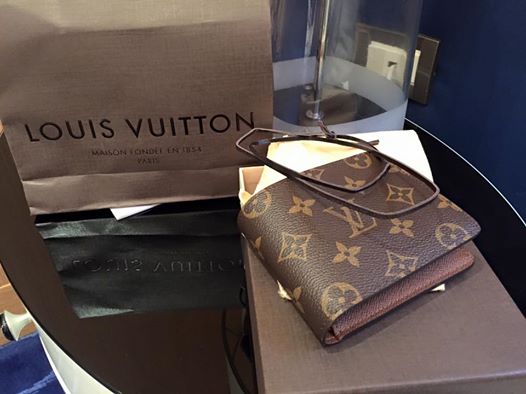
Louis Vuitton wallet

One day we were walking on Via dei Condotti, and I saw a crowd waiting outside a fancy boutique. Located on the same street of Gucci, Prada, Burberry and many others, it was a Louis Vuitton store. It was the only store with a crowd of people waiting to get inside.

It was time for me to explore the world of Louis Vuitton. Wandering around the men’s section, I saw a fancy wallet with multiple pockets and slots, unmistakably stylish in Monogram. Strategically placed with other accessories to noticeably stand out, it caught my attention immediately. I coveted it. Even though I was able to afford it, I kept debating whether or not I should. To a certain extent, I felt guilty paying so much for a wallet. You see, I’m a giver and buying something like this for someone else (mom, sister) doesn’t bother me one bit. It seemed quite ironic to me. But the impulse to own a piece of brown Monogram stamped with LV overpowered my rationale. It is a symbol of status and fashion.

We are all sensitive to public opinion; what others think matters to us. In a jocular way, the act of pulling a Louis Vuitton wallet out of pocket invites attention. Isn’t nice to flaunt it? – putting the wallet next to my iPhone on the table in restaurants so everyone can see. It draws the inverse sign of “nobody” to “somebody”.

The sound of the credit card swipe reminded me when I was student at the University. I was broke. I came from a poor family who barely paid house bills. I used to shop at Target and Marshalls for clothes. I rarely bought brand name items. Calvin Klein was a reach to dress a little fancier. Louis Vuitton, Gucci, Diesel Jeans and Boss were out of the picture. Even when I to went out with my friends, I bought Mad Dog 20/20 – a cheap liquor $3.00. We parked on the streets in downtown Chicago and drank inside the car before we went inside a club.

Twenty years later, I own timeless piece of Louis Vuitton, a beautiful wallet in an era where I rarely even carry cash.

Gold

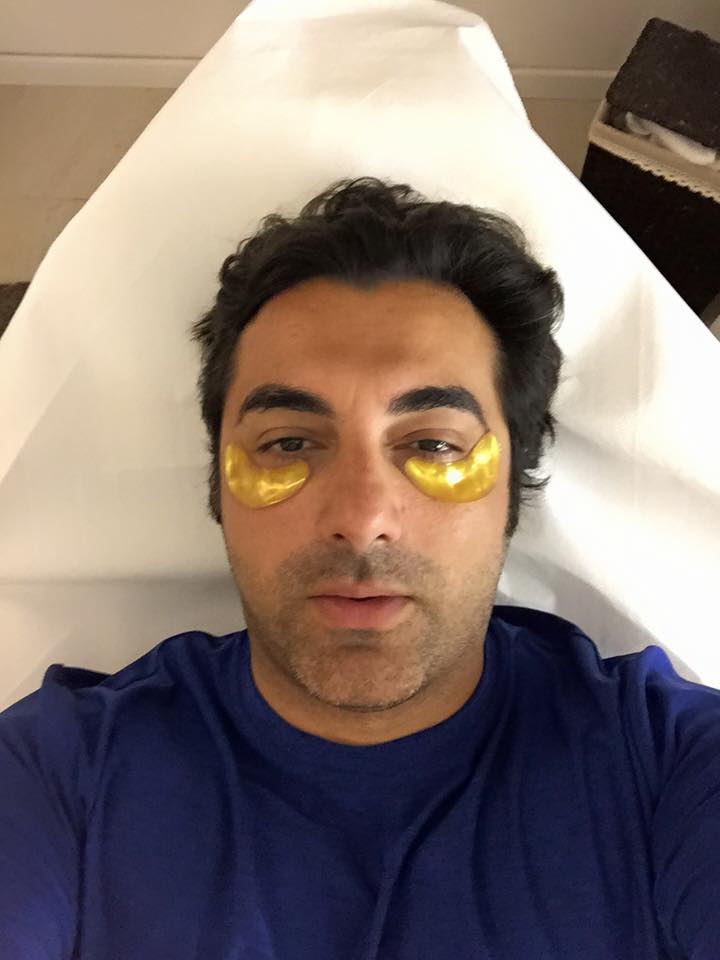
Another day, I was sitting under the column of the Immaculate Conception Piazza di Spagna waiting for my girlfriend to finish her facial treatment. I saw her approaching me with excitement, asking me to come and try something interesting and good for my eyes. We walked inside a store. A few minutes into the conversation with the salesman, I found myself lured in and lying on a bed, my eye covered with a 24k amalgam Gold eye mask from Adorenot even Roman emperors did that!

I was fully aware that the salesman was on a mission to convince me to buy the pricey treatment, but now that I had already purchased an expensive wallet, I figured why not just splurge some more since I can?

From iNeed-iWant-iWish, it feels good to be able to afford a European vacation, a LV wallet, and a gold eye mask. I have worked hard to be successful, and as a result, I feel I have earned the right to be lavish. It feels incredible, BUT…(check for part 2 next week)


* Click on  “Follow”  from the lower left corner to get updates.

* Please take a minute to comment what you think.

* Feel free to share.
Part 2- I Am Italian

* 4 min bold read

“Beauty is the great seducer of men”, Alchemist

“But if Italy were America, we would strip away Saint Peter, Virgin Mary, and all these saints from these columns…”

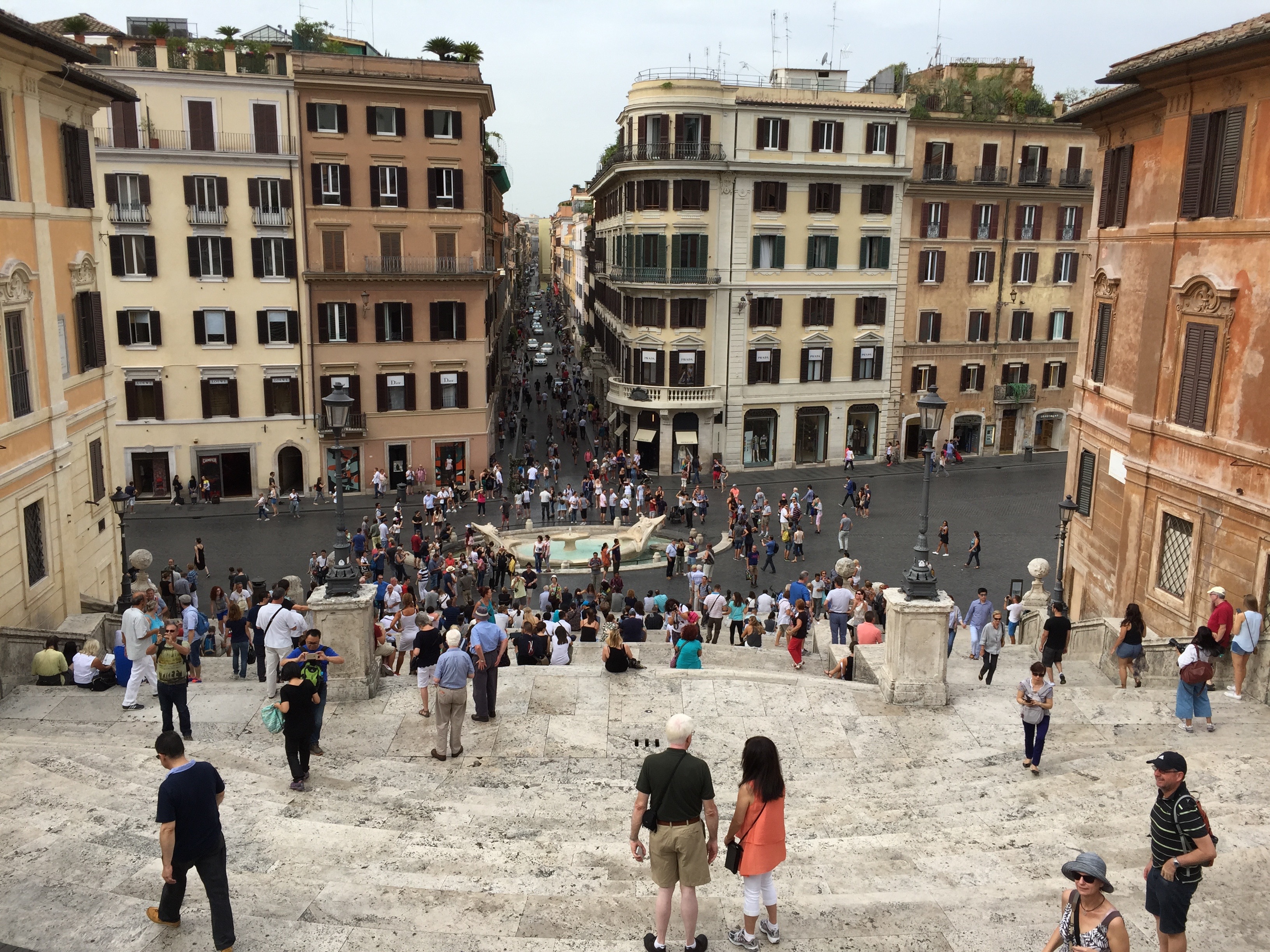
I reserved a hotel in Rome City Center. After a refreshing shower, I curiously went out for a walk down the ancient streets. Upon reaching the Spanish Steps, I stopped for a few minutes and gazed at the panoramic view of this beautiful city. Then I took the 135 steps down and arrived at the Fountain of the Old Boat at the center of the piazza – Fountana Della Baraccia.

I observed the sculpted boat in the center of the street and the fresh water flowing through it. It truly was unique. There’s nothing else in this world like it. It is based on historic facts. The Tiber River flooded badly in 1598. And after the water withdrew, a boat was found in the square where the fountain still sits today.

I appreciate the symbolism the boat represents. Sometimes there is no explanation for the things that happen. A boat simply appears on a street. And as weird as it may be, there is no option but to deal with the fact that there is a boat in the street.

Fountana Della Baraccia

It reminded of my problems. I left Chicago while my 75-year-old man was still upset with me because I didn’t give my uncle some money to help him. He is slowly dying with ALS at the hospice, and his only form of enjoyment left is playing the lottery.

We all have to deal with the unpredictable nature of our problems. They carry with them the moral components of right and wrong. And then we are faced with a choice. In the example of the boat, instead of trying to remove the problem of a boat in the middle of the street, they transformed it into a beautiful sculpture. So in the case of my uncle, instead of lending him money simply to alleviate his problem, is there something better that I can do for him?

I spent a few days walking through the ageless streets of Rome. I was taking pictures of monuments, churches, the Pantheon, statues, fountains, columns, and saints. Every time I was tired, I sat near a column or a fountain that had a statue of Saint Peter, Virgin Mary, or something. The saying, “When in Rome, do as the Romans do” has much truth to it because I never felt that I was alone. I felt near the vicinity and wisdom of Marcus Aurelius and Seneca.

I am not a religious person. But sitting under the shadow of saints above columns, I remembered ancient America. The Founding Fathers who conceived America from the wisdom of Cicero and Seneca and build it for the purpose of God under Christian values. It was blessed and became prosperous and the most powerful civilization on Earth.  

But if Italy were America, we would strip away Saint Peter, Virgin Mary, and all these saints from these columns, just like we drove God from public squares and Ten Commandments from courtrooms, or from our media by converting Christmas to Xmas or Merry Christmas to Happy Holidays.

After a few days in Rome, we took a flight to Sicily, and then another 30 minute ride to the old city of Taormina on the east coast of the island of Sicily. It is more than 200 meters above sea level on a hillside of Monte Tauro.

I reserved a room in Atlantis Bay hotel by the bay water. After checking in, we took a bus to the old part of the city. Watching landscapes and ruins from the bus window like the screen of a panorama passing, we were breath-taken. I was craving to touch these magnificent views that I had to make sure I didn’t jump out of the bus right then and there. We arrived at the old city in about 15 minutes.

The adjective “beautiful” does not do justice in describing the jaw-dropping scenery of the landscape. With narrow ancient Roman streets, open door churches, vintage color buildings, mountaintop apartments with magnificent views, restaurants with rooftops overlooking Mount Etna, I felt a strong desire to spend the rest of my life there. I coveted the life of this town. I longed to walk through the hills and valleys. I thirsted to see the blue sea and Mount Etna from a window apartment and remember Seneca and his wisdom. I yearned to drive those streets on the edge of the mountains. The aging buildings accept their status. They are old in the best sense of the word, because with age come riches in history, power, and wisdom.

Why did such a small village in another country seduce me despite the fact that I live in the great city of Chicago? Why did I fall so in love with a place because it has streets on the edge of mountains and vintage color buildings? I know it was ridiculous that I was passionately aroused by such a small and foreign village.

Still the feeling is familiar from our personal lives. We may find ourselves feeling the emotion of love by the way she speaks English with her Italian accent. Or we may get frustrated with her for buying expensive shoes. We fall under the blessing and curse of those trivial concerns. To ignore them is to discount how rich in meaning those small details really are.

Chicago is flat with extremely bad weather and has no ocean or mountains. We cannot enjoy the outdoors like this. A two-hour drive is not nearly as exciting. I value the distinguished characteristics of foreign lands not only because they are new, but because they seem to be in agreement more faithfully with my identity more than what my own city can provide. Italy lent me support to ideas and feelings that are a part of my identity that I couldn’t find in my city.

From my childhood in the midst of Muslims, I insisted that I was a Christian Assyrian. I abjure the Arab-sim in me. And I was avoiding saying I am from Iraq in my earlier years in American. But now, I agree with the nineteenth century French novelist Gustave Flaubert. His hatred of France made him fall in love with Egypt. He proposed a new method for ascribing nationality not according to the birthplace or family origin, but according to the place we love – a new national identity.

My native country is the country I love, meaning the country that makes me dream and feel well where I look like the native. I guess that means I am American; I am Greek; and I am Italian as much as I am Assyrian from Iraq.

At the moment of my bittersweet departure, I was at least happy and spiritually satisfied – I left memory there. I am certain I will return to Italy.


* Click on  “Follow”  from the lower left corner to get updates.

* Please take a minute to comment what you think.

* Feel free to share.
* Special thanks to Alin de Botton who enriched my life through his book “The Art of Travel

Part 1- Italy and the blue sign of fun

* 2 min

“And to those who believe that travel is expensive, I say try a routine that kills you far more quickly”

I enjoy traveling. That’s an understatement. Traveling is an integral part of living a fruitful life, the type of life I always wanted to live. It’s my dream, and I’m living it. The quotidian routine of my life in Chicago immensely bores me. I don’t wish to be immobile like a tree, staying in the same place and doing the same thing. That routine would kill me. The only thing worse could be being buried alive. My soul feeds on the excitement of immersing myself into a culture of different people with new scenery and a different language and customs and experiencing the mystique and adventure of leaving my mark on these different places. Traveling is my spiritual remedy.

Some countries are to be flown over, and others to transit through, but only a few deserve to see every city in them. And this year, the Angel of Good Fortune allowed me to visit Italy again. The land of the Roman Empire and Julius Caesar, of gondolas and Venice, of beautiful churches and villages, of gorgeous vineyards, of a language so beautiful sounding that swear words sound harmonious, of unique people, and of delicious food. I love Italy and its history.

After a 20-hour flight from the US to Italy through Jordan and Turkey, I arrived in the handsome city of Rome. Upon stepping on the stair car, I felt the wind in the City of Saints and God. It was a sunny day and a clear sky where I can see the heavens. A few steps inside the ground terminal, a blue sign caught my eye. Written in an emotive two words that announces the way to get your passport, “Passport Control”. It reminded me of a similar sign I saw in Malta’s airport.


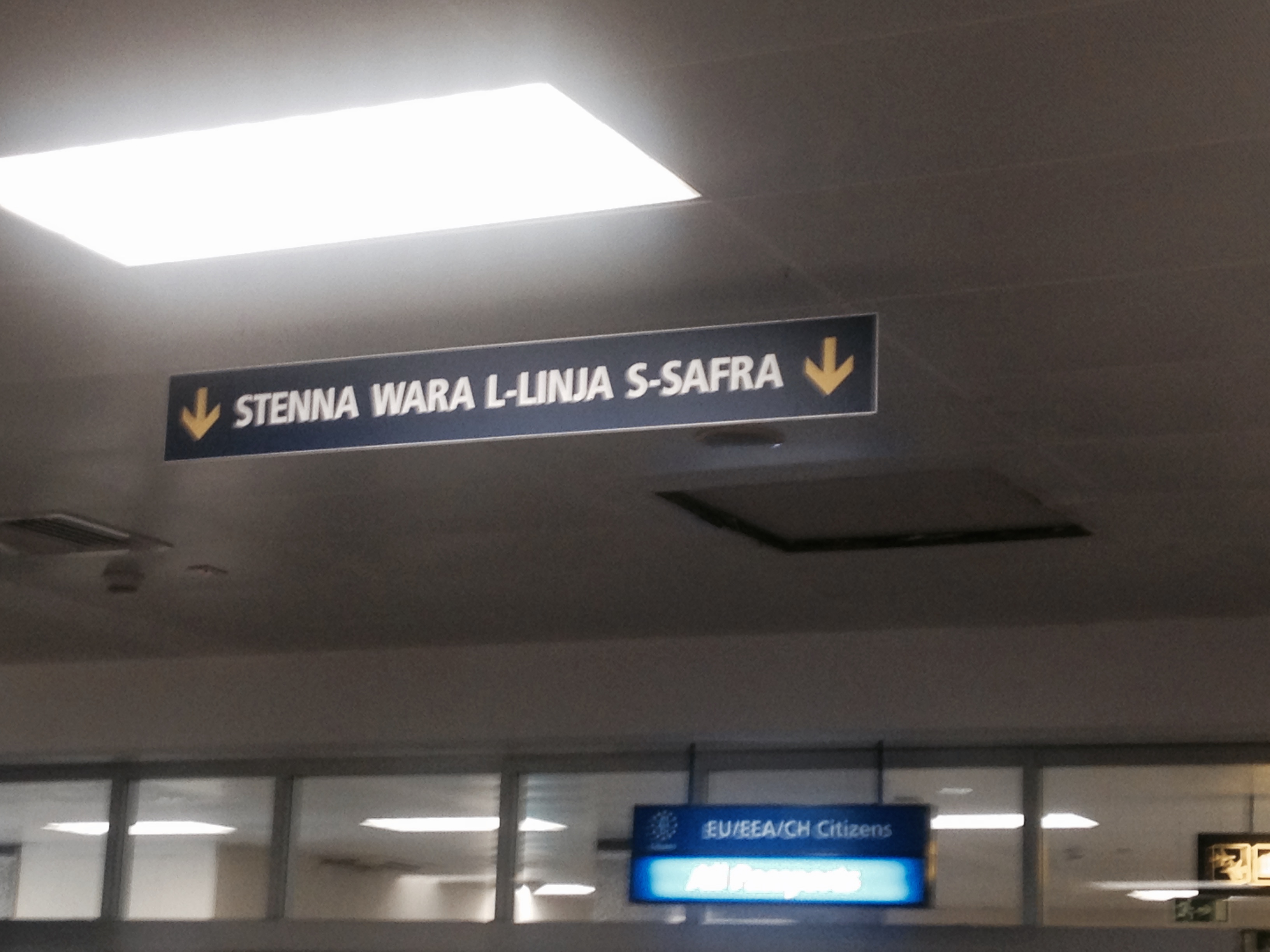
Malta’s airport

In an ephemeral way and verisimilitude association of the word “beautiful”, the charm of a foreign place develops from the simple idea of novelty and change.

Beauty is located in specific areas: in the ending of “O” in Controllo and “I” in Passaporti and their repetitions. The bequeathed Arabic words in the Maltese language of “Wara” and “S-Sarfra”, which mean “Behind” and “Yellow”. The signs present another history and mind-set.

The art of traveling includes all the small details of unaided discovery. It is learning from an absent teacher.

Passport Control


This time, “Controllor passporti” roused in me genuine feeling of a new imagination and a new reminiscence. It offered the first confirmation of my arrival. It was a symbol of being free like a bird to live how I want and travel where I want, thus, an exclusive emphasis on a new journey about to begin. The sign strongly suggested, despite its simplicity, that the country that lies beyond the passport control is in ways opening the door to a new experience of a lifetime.

Standing in the line waiting to be stamped so I can enter, I felt anxious but inquisitively interested in seeing all of Italy. A few minutes later, my passport was stamped and ready to go.

Every travel carries in its train some unpleasant moments. I walked to the luggage area and picked up my belongings, and then I took a few steps to the exchange booth. I soon discovered the sign of fun came with a large price tag. I exchanged $200 for 130 euro. Oops!

I scolded to myself, “this trip is going to be way too expensive!” But I knew it was going to be worth it!


* Click on  “Follow”  from the lower left corner to get updates.

* Please take a minute to comment what you think.

* Feel free to share.
* Special thanks to Alin de Botton who enriched my life through his book “The Art of Travel

Iraqis vs. Indians in Iraq

5 min

As I reflect on four years working in Iraq as an Iraqi American, I’ve come to a realization about certain sociocultural trends with regards to the workforce that are profoundly intriguing to me. There are some things I must express about Iraqi workers in Iraq.

It is my observation and strong belief that Iraqis are good workers.   They are honest, hard-working, optimistic dreamers who wish to create a life of freedom, independence, opportunity, and cultural acceptance for themselves and their families. Of course, not every Iraqi fits the bill, but to stereotype against an entire culture when there are only a handful of bad eggs is, in this day and age, baboonish.

The irony, however, is that Iraqi companies don’t hire Iraqis unless they can exploit them through poor working conditions, low pay, and unguaranteed contracts. Iraqi companies will further go on to claim that Iraqis have mastered the art of getting away with not doing any work, as if there is a secret society of manipulative Iraqis who share stories and tricks on how to take full advantage of Iraqi employers and abuse the work system.

That is to say, Iraqi companies have come across the handful of lazy Iraqi workers and have concluded through generalizations that it makes perfect sense for them to hire non-Iraqis instead. For example, an Iraqi super market owner will hire Indians instead of Iraqis. I caught up with such a fellow last week. My curiosity on this subject made for an interesting conversation.

Why aren’t you employing Iraqis?” I asked the supervisor.

His reply was…“why should I employee Iraqis?! The Iraqi employee will be calling off every a few days with an excuse to not come to work. One day, it’s his mother. The next day, it’s his son. Next week, it’s his mother in-law…until all the excuses run out of all family members. But then, he’ll start them again. Plus, I hear complaints all day from Iraqis. ‘This is too heavy’. ‘My back is stiff’. Or, I will see them being unproductive and hiding in some corner just to run the time. What’s worse is that they’ll make these excuses and do a half-ass job, but they still have the nerve to ask for a salary raise. I got so tired of them and started to employee Indians.

What about these Indians employees?” I followed up.

He continued, “These Indian guys will work 10 – 12 hours day…will work six days a week. They will never complain. And mostly, they will never call in sick with an excuse to not show up at work. Some of them are so dedicated that they come here early and leave late. In a way, I feel I can be free of preoccupations with their productivity because I hold their passport, which obliges them to remain productive and obedient.”

As the supervisor was talking, a few thoughts came to my mind.

Maybe there is some truth to what the supervisor is saying. Maybe because non-Iraqis are in an uncompromising situation, they must work diligently and strictly abide by all policies. They can’t take the chance of half-assing their jobs because they will fear being deported. Iraqis, on the other hand, can be a little bit more lax when working. Because of this, Iraqi companies realize this and therefore, prefer to hire non-Iraqis because they can exercise more power. Iraqi workers, likewise, can exercise more freedom working for non-Iraqi companies that may not seem as tyrannical to them.

The perception of this apparent feud has inevitably created a burgeoning hostility between Iraqi companies and Iraqi workers that is noticeably real.

The majority of Iraqis who worked for foreign companies, at least those whom I have spoken with, will eagerly accept a pay cut to work for an American company than to stay at home in Iraq.

A foreign company has outsourced the hiring process to an Iraqi subcontractor – basically acting in a capacity of an Iraqi labor force recruiter. It is in this class where I’ve formed relationships with several Iraqis, gaining insights on their career perspectives and surveying them on their interest in working for American companies.

I asked them why they feel working for a foreign company is most desirable. They had much to say, but here are their main points:

First, if they get sick and bring a doctor’s proof to management, which oftentimes is not even required, they will be treated with sympathy and will generally still get paid time off. This is not true in Iraq, for if they work for Iraqi companies and miss a day for being sick, their pay is cut.

Second, Iraqi workers don’t want to be hired by middlemen recruiters because they won’t get the benefits and guarantees that they would working for a foreign company directly.

Third, and most importantly, during the Islamic fasting month of Ramadan, the foreign companies understand the Iraqi culture. The way employers are lenient, understanding, and respectfully cautious with pregnant women about to go on maternity leave, or with their staffs during Christmas break, I have noticed, and these workers have confirmed, that supervisors don’t assign heavy-duty tasks during the month of Ramadan. In contrast, working for an Iraqi company, an employee requesting such a consideration will probably be on the receiving end of a callous managerial response such as, “You are fasting for God and for us!

As an Iraq-American who has both lived and worked in Iraq as well as America, I can say the following. Most Iraqis are NOT lazy. They are hardworking people. And Yes! They would rather work for a foreign company more than Iraqi company. This is because they feel more respected by foreign companies. They are treated better and have more a sense of individualism and work/life balance working for foreign companies.

How depressingly ironic it is that Iraq is finally a free country, yet Iraqis don’t want to work in Iraq and Iraqi companies don’t want to hire Iraqis?! This is quite a dilemma.


* Click on  “Follow”  from the lower left corner to get updates.

* Please take a minute to comment what you think.

* Feel free to share.

Working with Mr. Corporate A?

2 min

I’ve met many people during my life and employment years. Some of them were A$$.  It was easy to eliminate A$$ from my social circles, but working with one can be a real challenge, especially, if Mr. A is your manager or boss. I understand that feeling.

Not all corporate assholes are equal. The spectrum can vary from one with a Tasmanian devil energy going all directions to someone sending peeved emails like machine-gun fire, asking exigent questions before he gets an answer to the previous ones. Here is what I felt and went through when worked with Mr. A.

In certain moments, it felt just short of putting me in an early grave. Every time he walked into the office, his face indicated he had just made a devil’s pact.

corporate_asshole

Almost every time I talked to him; I felt his personality represented a mixture of bullying and barking orders. His dialogue was empty of “thank you”, “please”, “could you”. As for his barking orders, they came in form of “Do this…”, “bring that…”, “finish those…” And his maniacal attention to details was overwhelming in micromanaging.

In the corporate ladder race, his real forceful attitude was hidden from upper management. But every time he came to the office after meeting with his superiors, his true nature came alive. The people on the team had to put a show of surface geniality that barely hid the impatience in dealing with him.

Constant vigilance is the trademark for Mr. A. When he walked into the office or meetings, He gave the impression that his sole purpose in working inside a team or coming to the office was to monitor its members for any unintentional mistake to report or gossip about.

Mr. A was the type of guy that will share jokes, stories, funny mistakes about people, and contribute to them. Yet, he went documenting and complaining about those individuals whom he conversed with.

On a few occasions, I had to have lunch with him to discuss work. I heard him share personal stories. I felt some of them were fake and others were exaggerated. I wondered in my mind, did he think I am stupid to believe all this? He was insulting my intelligence. But I helped him believe his own lies.

Also there was a social tax I paid when associating with Mr. A. I felt my stock went down and a few people stopped associating with me.

Impulsiveness is part of my character. I can mange and control it; I did my best to avoid Mr. A during working hours all in hopes of escaping the agony of insincere chatter.

Mr. A was the type of person that made me fully appreciate that sometimes to not act is a man’s greatest triumph.

My story in dealing with Mr. A at work is paradoxically consoling. It helps me feel protected in comparison with future personalities – documenting every interaction with such people in a way to protect yourself. Maybe use an Excel file? 🙂


* Click on  “Follow”  from the lower left corner to get updates.

* Please take a minute to comment what you think.

* Feel free to share.

A few missing thoughts about ISIS: Inside the Army of Terror

7 mins

Casually perusing through books on Amazon, I noticed a New York Times Bestseller with a scary, and yet very appealing, cover of the ISIS Army coming from both sides to get us. The thought that instantly came to my mind was the magnum opus of ISIS – “Inside the Army of Terror”. I had to buy this book. I had to read it.

The book attempted to answer a few questions, “Where did ISIS come from? “ and “Seven months into its concerted multination air campaign, backed by the provision of arms to selected allies and proxies, is it winning or losing?”

ISIS Inside the army of terror

It seems the book was written before the ISIS crisis in Iraq and that it was continually updated as time went on. This made the book seem too contrived as it was based on initial ideas and themes that continued to evolve. A large portion of the timeline of the book covers the time period when the American Army was present in Iraq, leaving out the part of the book covering the list of terrorists and their group’s biography, stories, and fratricidal bloodshed. The Arabic names and words used made the book sound bombastic.

It is very easy to know the list of terrorist groups operating in any country. There is no need to emphasize, even proclaim, that an intense effort took place to [draw] on dozens of original interviews conducted with former US military intelligence and counterterrorism officials and Western diplomats“. Wikipedia and Google could have provided me with that information just as well.

The book is partial in its judgment, and the authors do little of explaining the geopolitical tension between countries that led to the rise of this “Army of Terror”. It seemed the focus was on Iran’s support to the proxy militia groups, such as Shia Iraqi Jaysh al-Mahdiand Shia Lebanon’s Hezbollah.

BUT when listing the Sunni terrorist groups such as Ansar al-Islam, Jabhat Al-Nusra and others, the authors depicted them to be only a pivot or a franchise of Al-Qaeda. The authors stopped short of mentioning that some Sunni countries were behind these groups – as if these groups never got support from Sunni countries. The authors implicitly stated that the Sunni countries did not have a hand in instigating conflict, even though that is obviously not true.

The pompous authors claimed they interviewed countless people, asked pinpointed questions, and conducted an extensive research. Yet, they could not even provide a list of Arab countries supporting these terrorist groups. Let’s say, maybe Qatar or others?   It seems their questions were not only esoteric but qualitatively SELECTIVE.

The political reality is that the war in Syria is a proxy war between regional and international countries. ISIS is only a proxy to this war. The axis of this proxy runs through Iraq dividing Iran, Syria, and Russia on one side, and Saudi Arabia, Qatar, and America on the other side.

Another issue the book failed to explain clearly is the very question it presented at the beginning: “How did ISIS manage to do so much damage in so short a period of time?” The succinct answer is that the road between Baghdad and Damascus was unsupported. The Sunni people were ignored for years – they were totally marginalized.

After the American Army withdrew from Iraq, it created a major void to be filled by all the fugitive terrorists, who were able to escape from the sustained and successful pressure of the American forces in Afghanistan. Terrorist groups and individuals around the world had motive to funnel into Iraqi territory and play on the chaos of Syria and Iraq, which has led to the rise of the “Army of Terror”.

Iraq and Syria are the Yin and Yang of each other. In Iraq, the Sunnis have been marginalized since day one from the liberation of Iraq. In Syria, the Sunnis have been marginalized for years. Saddam ignored the Shias of Iraq. Bashar and his father ignored the Sunnis in Syria. The Sunnis and Shias oppressed by their opposite sides ignited the 1500-year-old sectarian violence in the Middle East.

Let me quickly address a few more areas the book failed to explain. How did ISIS manage to sell oil for months and years? Who are those vendors and countries?

And did a few hundreds ISIS terrorists really manage to “[overthrow] a city in central Iraq guarded by as many as thirty thousand American-trained Iraqi soldiers and policemen in Mosul?” The explanations were naive and without any political ground. Is it because maybe the people of Mosul wanted to shelter them?   Were there unrecorded voices heard on the streets from the Mosul Sunnis saying things like, “We rather put our hand with the Devil than Nouri al-Maliki”? Did the formidable forces of ISIS bring Nineveh Province to a downfall? Might Nineveh Province have been sold?

Next, the book talked a bit about the Kurdish city in Syria named Kobani and explained the philosophical Islamic prophecy, but stopped short of explaining Turkey’s position. Turkey remained silent and didn’t interfere to liberate Kobani from ISIS. Turkey kept its borders loose for years for all these terrorist members to ride their subway system. Turkey has much to blame in playing same role in Syria as Syria played in Iraq.

(Below YouTube video recorded by an Iraqi showing two ISIS members riding the Metro in Istanbul. (Pay attention to the hidden T-shirt)


Moreover, for many years, there were numerous international meetings supporting the opposition regime of Syria, but they failed drastically to unite and form a coalition government. They couldn’t come up with ONE agreed upon strategy. It seemed Abu Bakr al-Baghdadi was the only guy who had a strategy and united the “embattled Sunni minority” much faster than any coalition.

Lastly, I am still wondering how a book could proudly claim to be a New York Times Bestseller and pretentiously have a title: an INSIDE of the Army of Terror, yet fail to even mention Turkey Albin’aili (البنعلي تركي ) who is Bahraini born, commander of the ISIS religious endowment, the producer of ISIS content, and the vocal leader and idealist motivator of suicide operations? Simply put, he is the religious center of ISIS and his name was absent from the book.

The book should have been titled “ISIS: Terrorist groups and leaders bios”.

As mentioned, one of the co-authors is a native born Syrian. He said, “The book is personal.” Allow me to add my Iraqi native Christian perspective. If Bashar al-Assad is removed, ISIS WILL conduct an ethnic cleansing against all the Christians from all their Syrian villages. The current state of the Christian minority in Iraq is vivid proof of that – case closed.

Christians and other minority groups would rather live under Saddam or Bashar dictatorship than under so-called “Islamic Democracy” or “Arab Spring”.

It is not about name dropping, but what do I know?? I am just a guy………who lived in Iraq through American liberation, pre-ISIS, through ISIS, and…post-ISIS.

ISIS is marionette……And regrettably, Syria ended up on the wrong side of history.

As for one of the earlier questions, is ISIS winning or losing? It has been more than a year with 6,000+ air strikes of coalition resulting in killing more than 15,000 fighters. YET they are/were able to recruit. Their numbers might be between 20-30 thousand fighters. They are able assault quickly, reorganize, reconfigure, integrate, pivot, with extremely powerful social media reach! ALL in real time! I wonder if ISIS has the chance to write books to the American public, ISIS will have 10x BEST SELLER.

What type of an organisation can do such a thing without any support from any country(s)?…I don’t know…Maybe it’s the rebirth of “Exorcist” in city of Mosul.

* Click on  “Follow”  from the lower left corner to get updates.

* Please take a minute to comment what you think.

* Feel free to share.

The Other Girl

The Other Girl - Final-WEB

August and Impulses of Resilience

* 2 mins

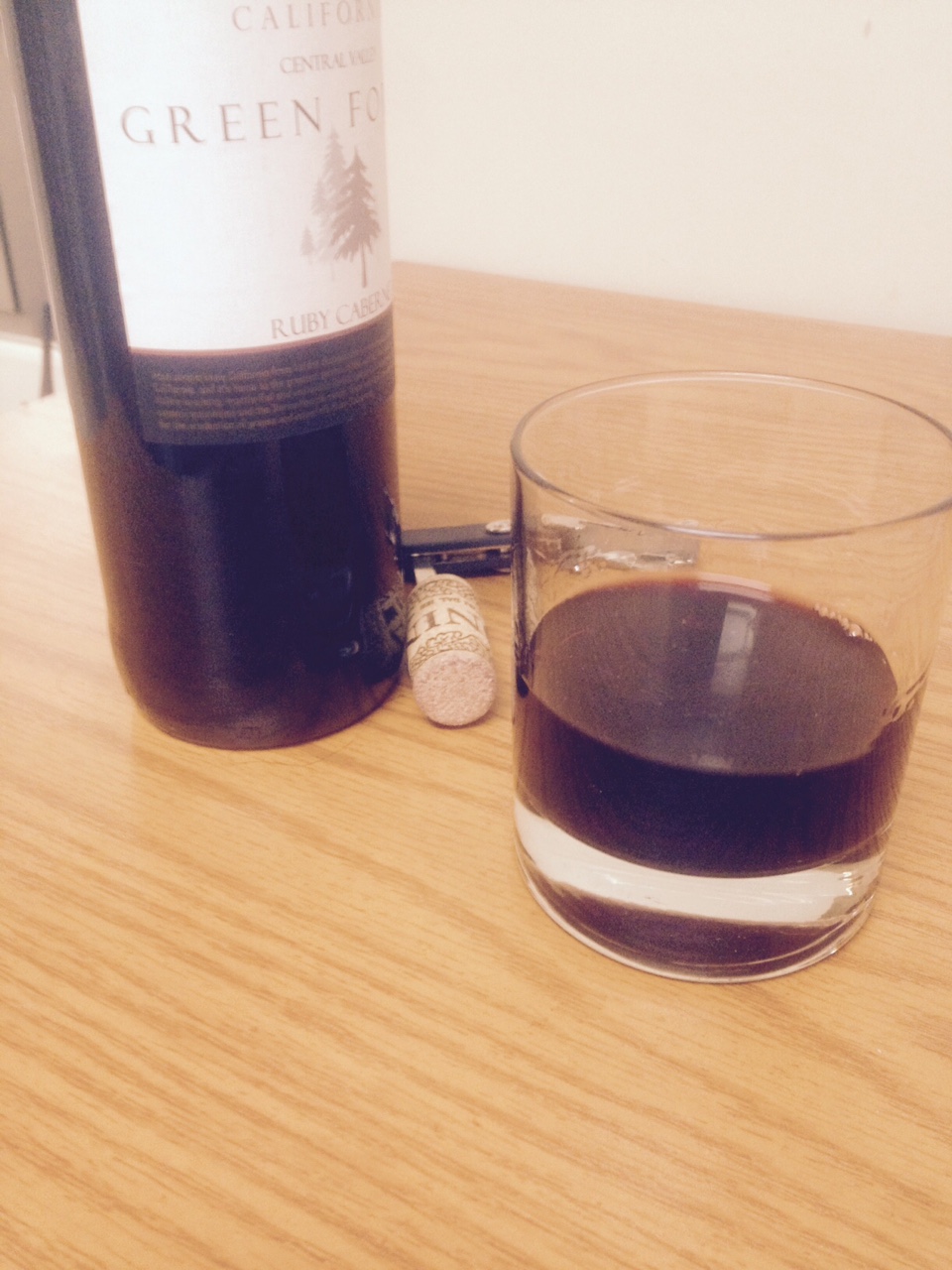
With the taste of Cabarnet on my tongue, I see the half empty bottle of red wine on the end table. The cork rests aside the bottle, next to the wine glass. Half of my clothes are already packed snuggly in my suitcase. The others lie on the bed, awaiting some folding and rolling. At this very moment, Alan Roubik’s “Spirit” is playing in the background. It is 11:37pm. I sit in my chair and look around my room, seeing the bottle as half full, and the bag as half packed. I’m in such a good mood right now.

“It is August again!” I say to myself with a rousing feeling.

glass of wine

The month of August has a very special meaning in my life. I experience three major anniversaries in this month.

For starters, it was in August 20 years ago when I first arrived in America – when I was born into a new world. It was a rebirth and a fresh start to my life. This year I will turn 20 American Years old. August 21st, 1995 is my American birthday.

During my past 20 years in America, I have gone on amazing journey. Imagine that I am driving on a highway called life. Well, I have cruised, braked, swerved, curved, called roadside service, offered a helping hand to others stranded and in need of a tow. I have found myself taking many turns and exits, which have triggered some pivotal moments for me.

August 1st this year marks my 10 year anniversary of serving the U.S. Army mission in Iraq. On the night of August 1st, 2005, I was flying 3000 feet above Baghdad in a C-130 military aircraft preparing to land. It was dark and cold inside the aircraft. As the soldiers and I sat wedged together, I felt like I was in one of those Hollywood movie actions about to start a major operation. There was so much action which I won’t even go into the details about right now, but let’s just say this was no movie. This was the real deal. And I am proud to be able to view that as another pivotal moment in my life because I never knew what to expect from that experience, but it has certainly stuck with me and made me grow stronger and wiser as a person.

Ironically, August 1st also signifies another anniversary for me: the day I leave the U.S. Embassy in Baghdad after almost four years. I just ended a long chapter in my life. The past years, the embassy has been a home for me. In fact, it is a home for those who left their own homes for a noble reason and have continued to work there for years. It was there, at the embassy, where every part of me was tested. It was there when I was driven to the extreme of every psychological, spiritual, physical, and mental edge. It was full of nights where I cannot lift my face off the pillow wondering how I can go on when I feel I might not have it in me. And that I could collapse in the heap of a car bomb.

I think those four years are perhaps the most significant for me because all of these stories and feelings that have kept me so alive and invigorated have finally found their way to pages upon pages in my very own blog that I can share with you. Just writing about all of these things has permitted me more time to reflect on enriching experiences that keep my mind turning like an awesome machine and keep my thoughts abundant, yet focused. In the past four years, I wrote stories in feverish bursts believing they would together form the novel of my life. It was moments like these that will live forever in my memory: 400,000 pages in Baghdad, Camaraderie of “Red Solo Cups” in the world of contractors!, June 16, 2014 will live in my memory…U.S. Embassy Baghdad, World Cup, Michael Schumacher, Argo, From club hopping to embassy hopping…partying next to ISIS…my crazy future, and Say happy work anniversary…Three years at the US Embassy in Baghdad… Artificial automatic courtesies

I like to think that I communicate a message to myself and to my readers about these experiences. And an underlying theme in all this which is courage, resilience, and risk taking. I find these every time I put on my headset, press play, and set foot on the treadmill, running…and running…and running…away from the frozen pattern of “the everyday” and into a world of thought, reflection, and liberation. I find comfort in the drench of sweat. I find progress towards new goals through the rapid palpations of my heart – those impulses of hope. I am a running, writing machine. Maybe my pen needs its own treadmill and then we will race…me and my pen.

Anniversaries are blessings. We owe it to ourselves. And the underlying theme is we all owe it to ourselves.


* Click on  “Follow”  from the lower left corner to get updates.

* Please take a minute to comment what you think.

* Feel free to share.

Part 2 – Standing sublimely on the edge of Malta

* 2 mins

Down the rocky beach, I walked as far as I could, to the outermost point, stepping atop the furthest stone I can extent my feet, at the edge of Malta, overlooking the great sea sprawling endlessly and creating a perfect horizon.

Malta is a wondrously beautiful country. A boat tour around complete Malta may only cost a mere $50, but the imagery is so splendid that it’s priceless. Malta is a small country that can be seen in a quick four days. Yet, the way people may find their favorite apple orchard or treehouse that they can sit in for eternity, Malta’s tranquility and serene views don’t invite haste, but rather a deceleration of all your heightened senses, and a pen and paper.

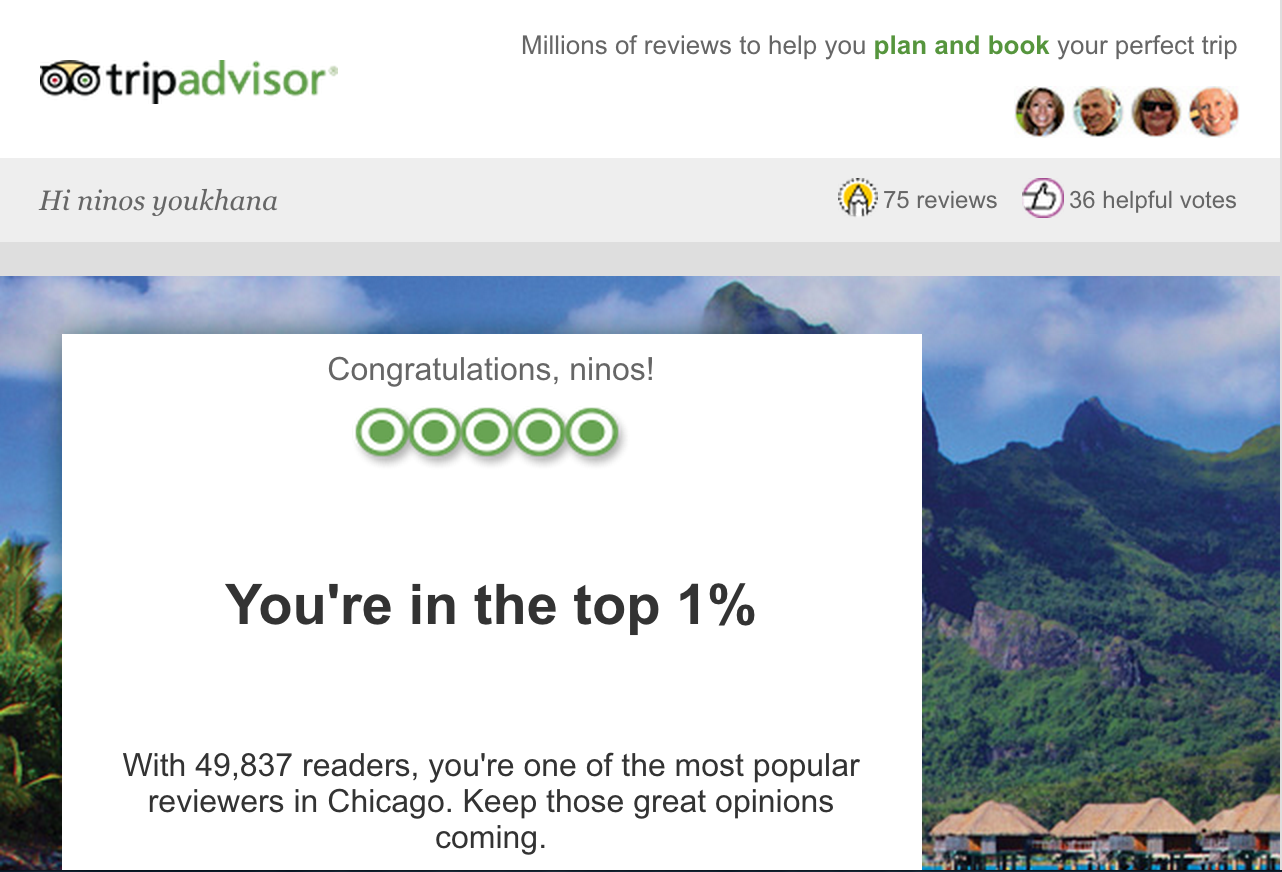
If I sat here today and tried to write to you about the natural beauty that adorns Malta, a dictionary would run out of adjectives for me to use. And it isn’t my intention to seduce your adventurous curiosity with my words the way tour guides and pamphlets do. Besides, you can always browse through TripAdvisor, vagabonder blogs, and travel guides to read detailed descriptions of Malta, with ratings and restaurant reviews as well. In fact, I have even provided my own reviews of many countries I have visited. Check out my TripAdvisor profile page for all my personal reviews

http://www.tripadvisor.com/members/nninoss

top 1 on travel

But one word I WOULD like to share with you. As I was traveling to Malta, I had

downloaded a travel book on my Kindle. I have always been drawn to scenic oceans and seas. Maybe it’s the sound of water flowing. Maybe it’s the fresh smell of the misty breeze at a waterfront. Maybe it’s the way the sun shines piercingly through the deep blue water. I’m guessing all three are responsible for transporting my mind from the normal thoughts and concerns of everyday life into a world of pure bliss and mental liberation. I was looking forward to experiencing this undisturbed awe again in Malta. That’s when I stumbled upon a new word: sublime.

Sublime is a concept that was originated around 200 A.D. It was attributed to a Greek author Longinus, but it had faded out of regular language. Yet, it was resurrected in the 18th century. The word describes the purest of feelings that emanate inside of us when we come face to face with oceans, mountains, glaciers….nature. In the past, I had felt these powerful emotions of mental escape and becoming one with nature. However, there was always a certain amount of effort I would have to put in to feel this spiritual joy. It was like I had to meditate in order to feel something. And I was now looking for a view that would be so powerful and intense that seeing that view alone would be sufficient enough to attain the height of sublime.

So, keeping this excitement in check, my main goal in Malta was to journey towards the Mediterranean and discover this view, and hopefully feel some sort of epiphany. The area described to me through the travel guide was extremely close to the InterContinental hotel at St. Julian’s area where I stayed. One of the days, I began my voyage.

Down the rocky beach, I walked as far as I could, to the outermost point, stepping atop the furthest stone I can extent my feet, at the edge of Malta, overlooking the great sea sprawling endlessly and creating a perfect horizon.

The Poet William Wordsworth came to my mind. I had read that he preached through his poetry that nature was an indispensable corrective to the psychological damage inflicted by the life in the city. I felt the need for that corrective. After all, I have been in Iraq for the past three years – in middles of wars and ISIS crises.

Gazing into the sea, I allowed my mind to find its true balance, to hope, to feel, to wander wherever it so pleased. I reminisced about my life, thinking about my successes, failures, dreams, setbacks, conclusions, confusions, desires, envies, passions, and compassions…and the joys of realizing not everyone gets this opportunity to find peace at the edge of Malta, and taking pride that I was fortunate enough to experience this in my life.

I felt like time was endless as I sat there, like my time on this earth was as infinitesimal as the blue sea. I felt transcendent. Like nature had full control over the world and now I was unified with nature by simply sitting there. It was like I was swooped up through nature that it was almost supernatural. Like I was an eagle soaring through the sky on my first flight.

It was like the Mediterranean Sea was the fountain of healing and youth and life that made all my worries disappear. It aroused my mind to sublimity. I realized that in this precious moment, I can take a backseat to nature, that I didn’t have to be the driver, that I can just let go of all responsibility, if only for a moment, and breathe.

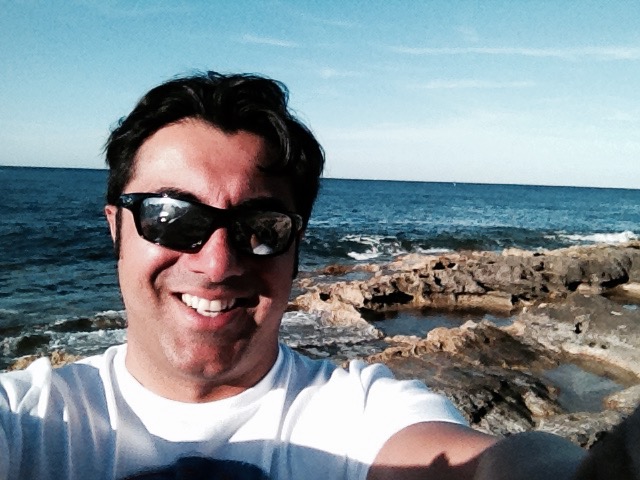
Fortunately, I didn’t completely let go of all tasks. I remembered to take a picture with my iPhone. I imposed myself digitally on this beautiful scene, (without any Instagram filters to modify its natural beauty), to bring home and remind myself of this sublime feeling anytime I needed to rediscover hope and let nature takes its course.

Malta


* Click on  “Follow”  from the lower left corner to get updates.

* Please take a minute to comment what you think.

* Feel free to share.