
10 minutes away…and the last walk
It is often said: “What goes around comes around”. 2013 became a special year in my life. It was a return to where it all began. I left in 1994 from my birth city Basrah, Iraq and in 2013 I returned. If someone had told me 20 years ago that my life would take an exciting turn to start a new life in America, and then return to work in Basrah with the American Consulate to help the American Consulate General with social outreach using social networks like Facebook and Twitter and enjoy having dinner with the American Consul General (CG) a few nights a week, all of this would have been mind blowing wishes. Yet, 20 years later in 2013, all these things came true. As I am humbled, honored, and thankful for the opportunities presented to me, I will continue to live my life treasuring this experience.
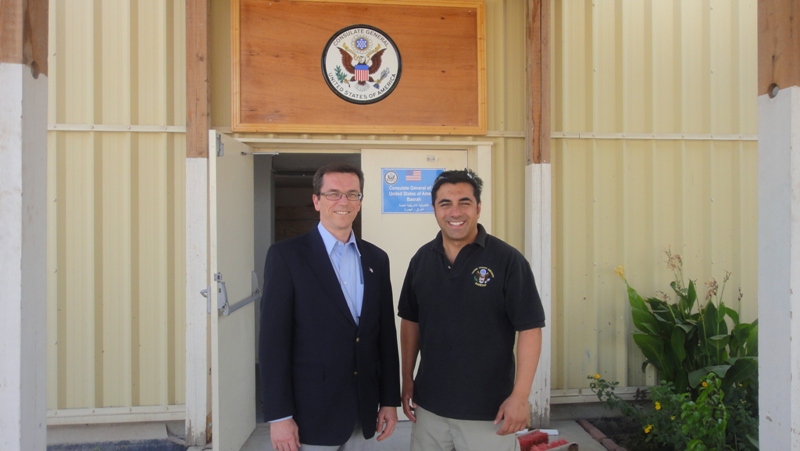
I was stationed in U.S. Consulate General located in the National Airport of Basrah. Due to my contractual agreement, I could not leave the premise. It was a feeling that was killing me softly. I grew up in a house about 10 minutes away, yet I could not go and see it. I could not walk the streets with the nostalgic feeling of the past that seemed to have passed so quickly to my future life, 20 years later. This thought will remain an itch that I could not scratch, a feeling that could not be satisfied, and a desire that could not be fulfilled. During my six months in Basrah, what echoed day and night in my head was that “I am 10 minutes away from where I grew up, yet I cannot go and see my childhood house.” It would have been a reflection of achievement.
On the night of 26 June 2013, I took my last nightly walk around the Consulate with my replacement. As a surprise to both of us, it turned out to be that our fathers were from the same city of Basrah, and they were friends. As I was walking, I became filled with the feeling of achieving a milestone in my life. My eyes were recording the scenes as a video camera, my brain was storing the images with feelings of joy and happiness. As I continued to walk around, I knew this would be the last time that I would see and experience all of this. It is all back to where I started first. I found myself swept up in the passion of the moment.
That Phone Call: A Call of Hope
While walking back to my room after work this evening, I decided to call my cousin Fradreek David. Fradreek is an Assyrian Christian refugee from Iraq currently awaiting news of immigration to the US in Turkey. During our conversation he expressed his hope for the call that will inevitably change his life. I understood that feeling all too well and after our conversation, I reflected on a few such phone calls of my own.
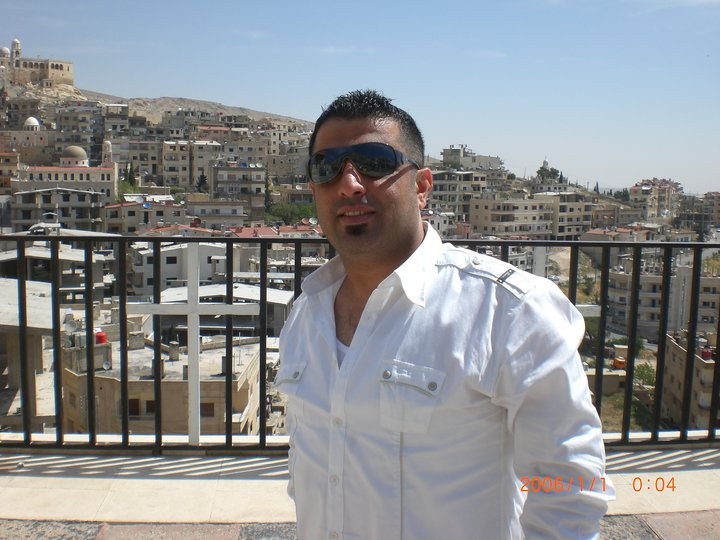
In 1994, I was in the same position as my relative, though my time in limbo was spent in Jordan. I was a refugee, anxiously awaiting a phone call from my family in U.S. about our immigration paper for entrance America. This was especially difficult after the Iraq-Kuwait war in 1991. My cousin, Fradreek, on the other hand has already spent four years as a refugee in Syria, until he recently fled to Turkey due to the increased amount of violence toward Christian minorities. He has been in limbo in Turkey for about 8 months now. He is 34 years old, and because of war he has been on the run for most of his life. He left Iraq to go to Syria, and now he is living in Turkey praying and waiting for an opportunity to go to a country that will accept him so that he can finally start his life. Let this be a listen to those who are lucky enough to have been born and/or are living in America. Our difficulties are far less significant than those who spend a significant portion of their lives living in or fleeing from war torn countries.
As for the phone call, Freadreek is anxiously awaiting news from the United Nations granting him permission for an interview to go to America. This phone call may be what makes or breaks the possibility of a future for him; it will change his life…
There are only few calls like this in a person’s lifetime. These phone calls bring with them an intangible amount of positive feelings and emotions. These are the type of phone calls that make someone stay awake all night out of sheer happiness. These phone calls drop people to their knees lifting their heads up and giving thanks to heavens. These are the phone calls whose dates are invariably etched into your mind forever.
Tim Ferris, for example, received his phone call on May 2, 2007 about 5 PM in New York City from his editor Heather when she broke the news to him that: he hit the list! The New York Times Best Seller List, with his book “The 4-Hour workweek.”
Another such phone call from came from Tony Hsieh to Alfred Lin one afternoon, where Tony decided to invest and be more involved to save Zappos.com ultimately turning it into the enterprise we know today.
Or this epic victory call
I remember a few phone calls like these; I can’t forget them because they changed my life. These are the phone calls that change the plane we live on. The first such phone call I received was during my time in Jordan; it came in the middle of the night, it must have been nearly 1:30am, in 1994. I was informed that my immigration paper finished and I could now move to America. My second call was on Monday, December 5, 2011 around 7:30Am; I was on my way to work in downtown Chicago, the call was to inform me that I had been hired to go to work with US State Department Embassy in Baghdad. These live changing calls only happen a few times in life, I’ve just shared mine… What are yours?
Are You Predestined to the Kingdom of Silicon Valley?
* Reading time is 3 min.
* I love to read your comments.
* It is my honor to follow me by click on (+Follow) on bottom right corner.
22, 26, and 47 are the ages of the three famous entrepreneurs who killed themselves. Then Ilya Zhitomirskiy, a co-founder of social network Diaspora was 22 years old in November of 2011. Araon Swartiz was the creator of RSS and died at the age of 26. Recently, Jody Sherman, the founder of Ecomom at the age of 47. Both Araon and Jody killed themselves last January, 2013.
These tragic events not only make me sad, but I believe make every true entrepreneur out there sad, too. It brings to mind Steve Job with his famous quote “I want to put a ding in the universe.” It is very sad, but true. These entrepreneurs have put the ultimate ding in themselves, after having shared their gifts of creation to us.
Having worked and suffered nearly five years alongside many U.S. Army soldiers, this feels almost like the “ultimate sacrifice” that the soldiers in the war on terrorism have given.
With a heart filled with the sadness of this news, I read about a term called: “Soft Bipolar.” According to the article, a soft bipolar is “a distant cousin to manic depression that often includes mild depressive dips and a light form of enthusiastic, energized, creative mania, called hypomania.” It was depicted in an article titled “Why many entrepreneurs are privately suffering, and what to do about it” by Bryan Neuberg and Michael A. Freeman M.D., a psychiatrist and former VC startup executive, who’s experience in the industry and background led him to coin the title, “Soft Bipolar”.
For a passing reader of the article, it makes perfect sense. Michael Freeman is a doctor and venture capitalist who understands what entrepreneurs go through. In the end, who can discredit a doctor and venture capitalist? Especially, if an opinion against a doctor and V.C. come from unknown people who can’t show data and graphs to prove things.
Allow me to share my opinion with some salt and paper feelings. The term Soft Bipolar makes me feel insulted and sick to my stomach. In his article, Bryan describes many entrepreneurs as being depressed, facing extremes ups and downs, and vulnerable to mood fluctuations in peruse of their dreams. The case may be true; some entrepreneurs may be sad and feeling low under a great deal of pressure and in their darkest moments when failing to achieve their dream. But my problem is with the labeling and name calling of the article. To label certain people as “Soft Bipolar” is what I call a “Crime Against Entrepreneurs”.
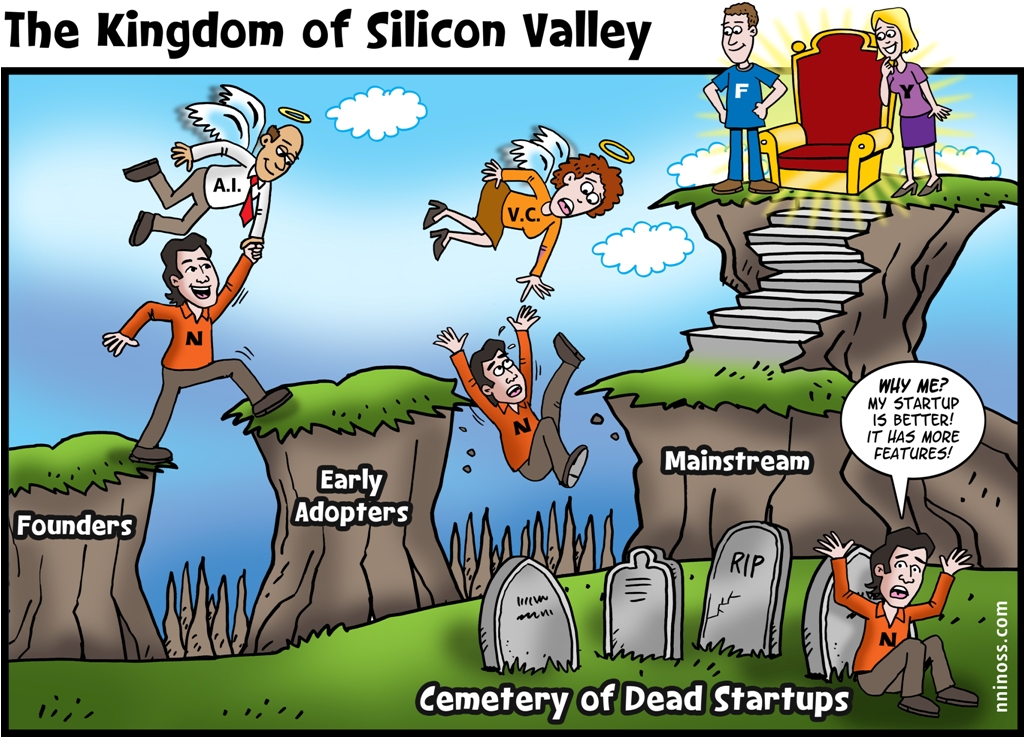
My thoughts and concerns to fellow entrepreneurs are to be aware of the “Soft Bipolar” label. Being the founder of a startup and having been an eyewitness to three wars in my life, I understand and feel the pain of many entrepreneurs who have buried their startup in the “Cemetery of Dead Startups.” I am sure, if people like Dr. Freeman were to treat me, they would diagnose me with many such labels and prescribe an unthinkable amount of medication such as Prozac or alike.
In my opinion, I have lost faith in pharmaceutical and healthcare industries. These industries are being driven by maximum leverage and are constantly seeking new segments and categories to achieve maximum profit. The ethical classes in their corporations are nothing more than a facade for balance sheets. Once I read that article, I felt that it was a new beach segment emerging for the new marketing campaigns theoretically titled “Prozac for Entrepreneurs.” It is almost as if they are trying to force a fix for people like us in any way, shape or form. Their opinion of people like us is that we have come with the wrong user manual.
They are willing to divide, subdivide, label, categorize, and subcategorize us to the last end of the long tail to generate profit. And this is where the danger starts, with the label: “Soft Bipolar”. Once they make such a label, they are able to commercialize it, qualify it, sell it, and measure it. If you try to resist that, you will be placed under the natural pressure of life, they will play the game of denial against you. If you are easily placed into their scientific marketing, they are able to manipulate your brain through its subconscious. This is when you know they have succeeded in reaching their target market. They take advantage of weaknesses of the (average) human mind.
I pray and hope that these three sad events will not be an excuse to start a new wave of Prozac pushing or similar campaigns driven to maximize the profit margins of the corporations in these industries. My faith in these industries is diminished. As these corporations are hungry and in constant search for an excuse to new wave of ad campaigns, they could very easily take advantage of entrepreneurs who are under stress. As the constant search for that perfect blueprint of society is to fix the natural “defect” in using the veil of improved science, and caring for the mental health of the average human. Hence, what I call “Capitalistically Ethical”.
Speaking from experience of going through a difficult life, my advice to entrepreneurs is to not let failure of one startup lead to the failure of life. Happiness is not always achieved through the success of your startup. If you cannot make it, then try next again. Failing is a success if you are learning from it. And, it could be a connecting dot as it was in the life of Steve Jobs from his famous speech at Stanford University.
As I write this blog, I have a Bible next to my laptop on my desk, I think of the following quote: “While many are called, a few are chosen,” Mathew 22:14. This is the controversial issue of predestination to the Kingdom of God; however, this time the predestination is to the “Kingdom” now known as Silicon Valley. While Mark Zuckerberg, Steve Jobs, and Marissa Mayer are among the chosen for this new kingdom, I am sure there are many entrepreneurs who continue to pursue their dreams, including myself, facing many barriers and filing constantly.
Being the founder of a startup, I understand and feel the pain of many entrepreneurs who have hosted a funeral in the “Cemetery of dead Startups”.
I am confident in my assumption that many entrepreneurs’ hearts are filled with stories of untold grief. Many seek salvation and redemption by trying to copy and paste what they consider to be magical strategic steps, ones that worked for other startups, or by reading articles/blogs/books that educate them in adjusting their strategic planning with the hope that they will be illuminated and find a way to the path to the “Kingdom” of Silicon Valley.
My advice to my fellow entrepreneurs who are suffering, feeling sad or emotionally low is to examine themselves and check their motives of why they are seeking such ventures in the first place. I hope that love for what they are doing is their true motive rather than seeking a chair in the “Kingdom” of Silicon Valley with its false allure of happiness, money and fame.
There are no better words than those of Steve Jobs, the perfect example of a failed entrepreneur who sought love and did not let failure stop him from advancing to his seat in the great “Kingdom” of Silicon Valley.
I would like to reiterate the following sentences from his famed speech: “The heaviness of being successful was replaced by the lightness of being a beginner again… Sometimes life hit you with a bike, don’t lose Faith.” Find love in what you like to do, keep looking, and don’t settle.
I encourage every person to watch this video:
Three Adjectives that Define Me
And who are you? Or tell us about yourself? Questions many of us face in many ways, whether it was in an interview, or going around the table introducing ourselves. As for me, I was asked many times this question, “Who are you?” by many one, two, even 3 star U.S. Army Generals when I was in Iraq. The last time I had to introduce myself was a few months ago at a dinner for the U.S. Consul General Bill Grant for Basrah.
A few adjectives echoed in my head over my last encounter with a high official, a U.S. Consul General. The memory reminded me of many previous times when I introduced myself, but had the feeling I was giving an incomplete answer. Therefore, I decided to write this blog and give a complete account of three adjectives that describe me. I am not speaking about one of the most fundamental American questions, “What do you do?” in terms of skills as a programmer, as Tim Ferris called it an Epidemic of job descriptions as self-descriptions. I strongly feel that this question is about the identity of who we are, our thoughts, and our feelings that drive daily life decisions.
I Am Ninos. I am an Assyrian-Christian-American born in Iraq.
The three adjectives are Assyrian, Christian and American. I feel more like a Middle Easterner in America, and more American in Middle East and around the world. A hyphenated complexity complicated furthered by decades of war in Iraq during the first half of my life living under a totalitarian regime, then to live in freedom in the next half of my life under a democratic regime.
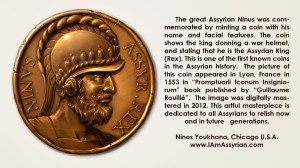
I Am an Assyrian. And, it starts with my name Ninos (Ninus, Ninvs), known to be the founder of Nineveh, a Capital of the Assyrian Civilization 6000 B.C. I am in Diaspora and exile from Assyria, modern form Iraq, (not to be confused with Syria). Sometimes, I share with my father the traps of consuming and obsessive nostalgia. Maybe I have missed being a prisoner of my own memory or origin. It is a minority of the ruminating Nation of Assyrian who are in diaspora. My family members are scattered around many countries: Canada, Germany, Sweden, Holland, United Kingdom, Lebanon, Austria, and Australia to name a few, and some remain in Iraq. This has been a by product of many wars. My family and I is a sample of the Assyrian Nation. We have become a Nation without borders. I am a ruminate of 6000 B.C., I am the people of Nineva from the Old Testaments. As it is written: “Assyria, a blessing in the midst of the earth.. and Assyria the work of my hands” Isaiah 19:23-25.
I Am a Christian. It is an adjective I purposely add to my definition when I introduce myself to people. It is an adjective that adds a second dimension to who I am. Some people have an allegoric feeling when they hear this, others have careless feelings depicted by a, “And So” reaction to it.
However, it is a heavy adjective that comes second in definition. If you are not from the Middle East, then you don’t have a complete understanding or feeling for the word. Many of my ancestors died for the sake of being Christians. It is a belief encoded in our genetics. My values, traditions, customs, and a drive in my daily decisions come from this belief. I proudly confess my faith. With all due respect to the cooperate America that is so allergic to the word Christian, my life destiny is not determined by an H.R or recruiter. I believe in a living Jesus who has the Heavens and Earth.
I found it to be extremely ironic when famous entrepreneurs and visionaries like Steve Job or others talking about having faith in their products or services, yet the word faith comes from religious context had have abounded that definition and adopted it in their creation. I wondered about this: “How could they have faith in an object or better yet, how could they produce faith, if they don’t have faith in a living God in the first place.”
I am an American. It is true! My name does not sound an American name like Mathew or John. I don’t eat hotdogs or have a dog. I don’t like baseball, and don’t watch American Football. I don’t drive Harley Davidson. And, I am not white. I speak with an accent. I cannot spell. But nevertheless, I am an American.

I have served, helped, sweat, and taken shelter shoulder-to-shoulder with American soldiers in cement bunkers and behind t-walls in Iraq when it rained mortars, rockets, and grenades. I was honored to receive The Outstanding Civilian Service Medal signed by LTG Raymond Odierno, 2007. I worked more than three years with the U.S. Embassy in Baghdad. I did my job faithfully to America.
Will Facebook and Twitter be the next Black Swan?
The trend of implementation of Social Login started as a nice option for many websites and Apps. However, it seems it has become the standard for login for many new startup companies. I have been monitoring many startups in the web area, and I see an increasing use of Facebook and Twitter as the only options to create an account. The DNA of Facebook and Twitter is part of the fabric of almost every new startup, but that DNA could carry with it some few bad chromosomes.
As a founder of a social startup website, I do understand the benefits for new members of using Facebook and Twitter as a Social Login to create an account with the use of authentication and authorization. However, I like to share my experience of using such technology and the possible dark side of it.

When I implemented the use of Social Login in my social network believing in its benefit, I quickly realized the shortfall. The advantage is clear. It is simplifying the creation of profile data or what is called PII (Personally Identifiable Information). This benefit has a draw back. The biggest short fall was in the data. The lack of completing the data in the profile registration was a major issue. As a social network founder of 1000+ users, I faced tremendous challenge to have the user complete their profile to create meaningful data though data mining. Regardless of the point/reward system and numerous emails send to nudge the user to complete their profile, the majority ignored it. I am sure many studies out there give explanations with statistics and percentages; I can give you my pure intuitive conclusion. It is simple due to combination of personal nature of carelessness and laziness. They are not inclined to go back and update their profile information, because they have already created an account.
The second draw back, as a user of many social networks, I have come to dislike using my Facebook and twitter accounts. After using my accounts as social logins, my Facebook and twitter pages have been full of companies advertising materials. Some of the websites will not allow me to disable the social sharing of content. If I deselect that option during the Facebook registration, then I will not be able to use Facebook as login. This has had a major side effect because many of my friends filtered my newsfeed due to the adverting content on my account being pushed by these companies.
The third draw back of the use of Social Login reminds of me the banking system. As many of us know, the banking system has been globally connected in a very complicated way. A collapse of one bank could result in extreme impact in many banks, as was the case of collapse of Lehman Brothers. It was an unreliable and unexpected, too big to fall event.

This analogy has been echoing in my head for some time. What would happen to many startups or other companies if a Facebook or Twitter Black Swan event occurred? Imagine if a virus hit any of the social networks, what would be the result of operation cost to your startup? I believe the need provide the traditional way of creating user account via the website itself should be the main choice of user created accounts (Recommended), with the option to use social logins as secondary option.
Don’t believe me yet? I read this article yesterday Tensions Rise Between Facebook, Developers
Love to hear from you 🙂
Entrepreneurship Management Lessons from Life
To be an entrepreneur, a person must examine his/her life and learn as many lessons as possible from life itself. In my personal opinion, if someone cannot manage their personal life correctly, then they should not attempt to create a startup.
According to the Lean Startup methodology, a startup requires a new entrepreneurship style of management. Entrepreneurs must learn to adapt to life’s uncertainty. To be successful someone must learn from life’s lessons because life itself is difficult to manage. I strongly believe entrepreneurs should examine their life’s lessons and apply them in their startup.
As for me, my personal lessons came after being highly leveraged which pushed me into high risk, and the second is to be prepared for unexpected. These two will require you to set your priorities in the correct sequence.
I was in Iraq from August 2005 to January 2010. During that time, the global recession occurred and the housing market collapsed. During this period I worked and invested, and was doing well. But the universe aligned against me and I lost most of my money.
During my four years working as a contractor in Iraq, I had the potential to make $740,000 before taxes. Looking back on it, I never thought I would lose that amount of money so quickly. But here I am, with a house, condo, and the following story of what happened to show for it. Let me break it down for you.
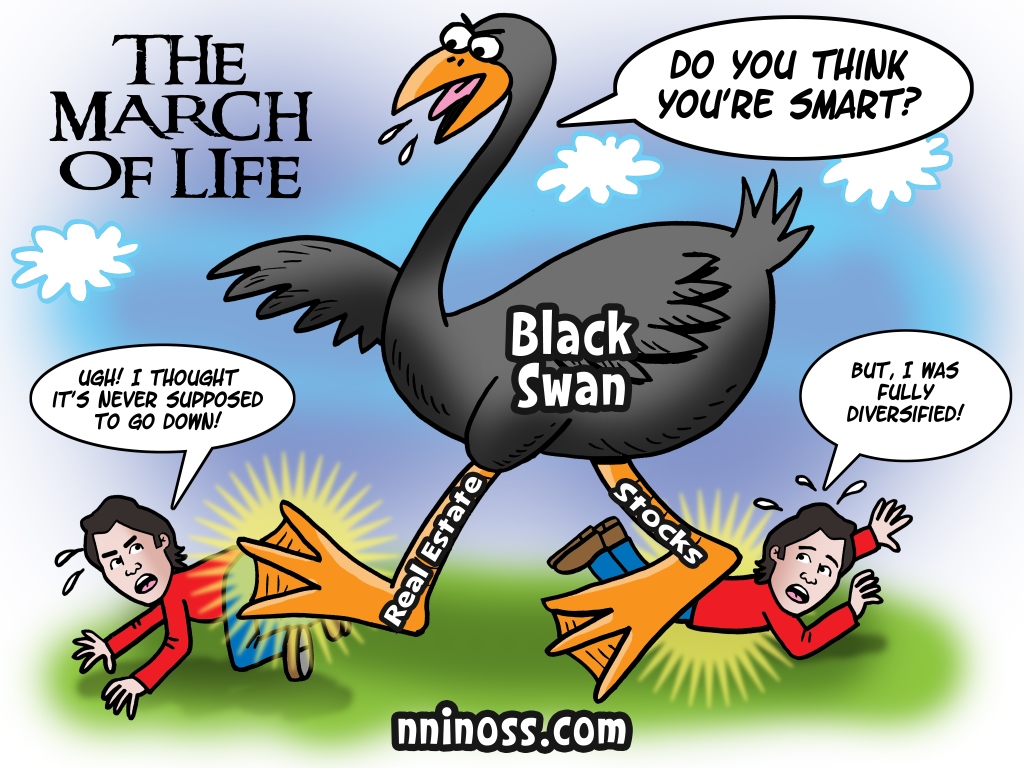
Stock:
After maximizing my 401K and IRA I started to invest in stocks, especially, Apple and Research In Motion. As any other person, I started with paper trading, $5000, and bit by bit got sucked in to it. My investment grew to 50K, ten times my original investment. I decided to go further and started to invest on margin accounts, meaning I had invested $50k, then $1 for $1, I was on a credit line of $100K.
Some days, I was making money and some days, I was losing money. I was making a few extra thousand on Apple when it was trading around $176 dollars a share and Research In Motion on $89 a share.
Then I was introduced to an MIT graduate who developed a system (http://www.aestocks.com/) to select stocks to invest in before they announce earnings. You would buy the stock the night before and sell it the next day.
I was not making the return that AEStock indicated, but nevertheless, I was still making and losing money. Then, in September 2008, Lehman Brothers collapsed. My Apple and RIM stocks dropped so low that I could not hold on to them, and I had to sell because I was on margin calls. That was a big mistake.
Real State
Back in 2005, the real estate market was booming. And as usual, I followed the crowd.
My family and I started to look for a house to buy in Skokie, Illinois, the north side of Chicago. Houses were going for an expensive rate. We were looking to buy a three bedroom, two bathroom split level house. Prices were from $375,000 to $450,000, depending on the location and condition of the house.
During that time, people were remodeling their homes and spending a lot of money. And I was angry about the housing prices because I believed they were inflated.
In social gatherings with our Assyrian community, some people took it personally when I said their homes were not worth that much. It was like insulting their wives. In fact, it would probably be better to insult their wife than to say their house is not worth the asking prices. Going against my intuition, we bought a house for $365k, $36,000 a 10% down payment and remodeling. Some time passed and I refinanced the house with 20% equity.
I went back to Iraq and continued working and making good money. I was making about $10K a month and could afford a $2,600 monthly payment.
Around September 2007, I decided to buy a condo in Skokie, IL for myself. My idea was to buy and remodel the condo and get it ready for when I returned from Iraq. I finally settled on one with an asking price of $165K. With the down payment and closing costs, I ended up putting $50,000 cash on it (or six months worth of wages). Then I ended up spending another $50K in remodeling. I replaced the electrical wiring system, rebuilt the porch, installed an Elfa shelfing system from the Container Store, bought new appliances, painted the condo, etc.
I ended up leaving the condo vacant for about two and a half years while I was worked in Iraq because I was worried someone would destroy it if it were rented out. The cost of leaving it vacant was about $30,000. The dumbest mistake of my life! After family pressure, I decided to rent it out and stop the financial bleeding. And then I went back to Iraq again for a third year.
Startup Internet Business
In Iraq, I had a lot of free time. After being disheartened with the stock market, the Real Estate bleed out, and the pressure of Iraq war, it was time to switch gears into something new.
I wanted to reset my brain, build positive feelings and start something different. I read many books about business and Internet development. I had resources and time, and I was reading about 2 books a week. In those few years, I read almost every single book that made the bestseller list. I was sold on the great lure of lifestyle design and new riches. I wanted to claim my freedom from the default lifestyle of work. I wanted to try an internet business.
And a social network idea was born. But I will speak about the idea and the execution of the startup in a different blog and will answer questions like: Why did I choose www.IAmAssyrian.com? Why did I pull the plug on it? What did I learned? But in the end, this financial endeavor end up costing me more in cash.
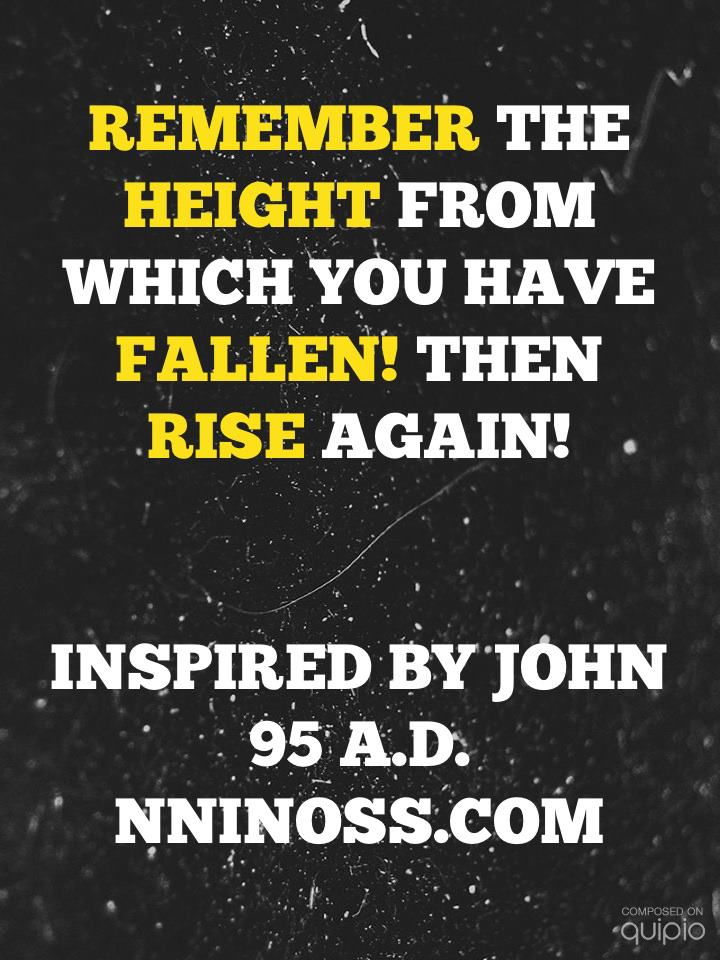
Finally, life has taught me new lessons under a new concept. I came to understand the “Black Swan”. Black Swan events phenomena occur as part of life and my blindness with respect to randomness. I call it the Black Swan Strategy. I recommend many entrepreneurs to look into it. I would like to share some learning point: For an Internet startup, give it your best and apply your life’s lessons to your venture.
The Intelligence Index of America 2020
This is my answer for why I should sue Microsoft.

What is capitalistically ethical?
For those who don’t know, I am Christian Assyrian born in Iraq. I worked with the U.S. Army for about 5 years in Iraq as a linguist and the last two years as an Iraqi Advisor. Throughout that time, many new U.S. Army Generals and commander rotated in and out. For many of them, it was their first tour in Iraq.
I think first impressions are interesting from the new arrivals in Iraq. And, I enjoy watching the facial expressions on people’s faces during their familiarization period in Iraq.
One of these factors is cultural difference. Many people assume Iraq and other third world nations are corrupt nations. I understand and agree with that assertion.
But, for a moment let us look at corruption from a different perspective with two tangible examples of business in both Iraq and the US.
Getting a passport in Iraq is difficult. You fill out applications and submit three to four documents to the passport agency, and you wait. The process takes about one month in Iraq. However, there is a more efficient way for an Iraqi citizen to get a passport. I understand America’s love with the word efficient, in Iraq it is called, “rashwa” or translated in English, “bribe.” Bribery is unaccepted in the U.S.
However, in Iraq, an Iraqi citizen will use his relatives, friends and tribes network to find a connection to an official working at the passport agency. Once that connection is established, a negotiation is reached for the asking price and time of delivery. Hence, an Iraqi citizen will pay X amount of money in return for getting the passport delivered home via a courier, and that courier will most likely be a friend.
When I explain this custom to new Americans in Iraq, they are surprised by the corruption about 90% of the time. While I enjoy their surprised look, I ask them how it is in the US. And when they are silent for about three seconds, I ask: How about a third-party 24-hour service to get your American passport? Or expedited 3 day delivery?
What are these accelerated services in America? Somehow, somewhere, someone made a deal with the passport agency to allocate specific time for expedited service. This time is given at the expense of the public. If there is a limited amount of time to interview the public, then the public will lose some of the allotted time to third-party passport businesses. What is the difference between paying an Iraqi official extra money to expedite a passport than paying a third-party company in the U.S.? When I tell this to new arrivals, I enjoy watching their face as they begin to understand, “Aha! I never looked at it that way?”
Secondly, to open a small business in Iraq, you need to give money, “rashwa,” to many people and officials to expedite the government bureaucracy methods. The paid mediator who works on your behalf will process all the paper work between government agencies. Otherwise, your business application will die in the “Cemetery of Bureaucracy”. And the more you pay, the faster your application moves between government agencies. It requires more people’s involvement and more people to please.
In America, many of my friends are small business owners. They range from liquor stores, restaurants, hookah places, mechanics, construction companies, hair hairstylists, and more. Small businesses have been the backbone of the American economy since the emergence of America.
I witnessed the creation of their business and the suffering of obtaining licenses, being approved in different zones, or other legal issues. Part of their struggles to get their business approved requires them to pay some type of “donations” to an alderman or other officials. “In the name of a donation” I will get your business approved.
At the end, it was worth a smile. 🙂
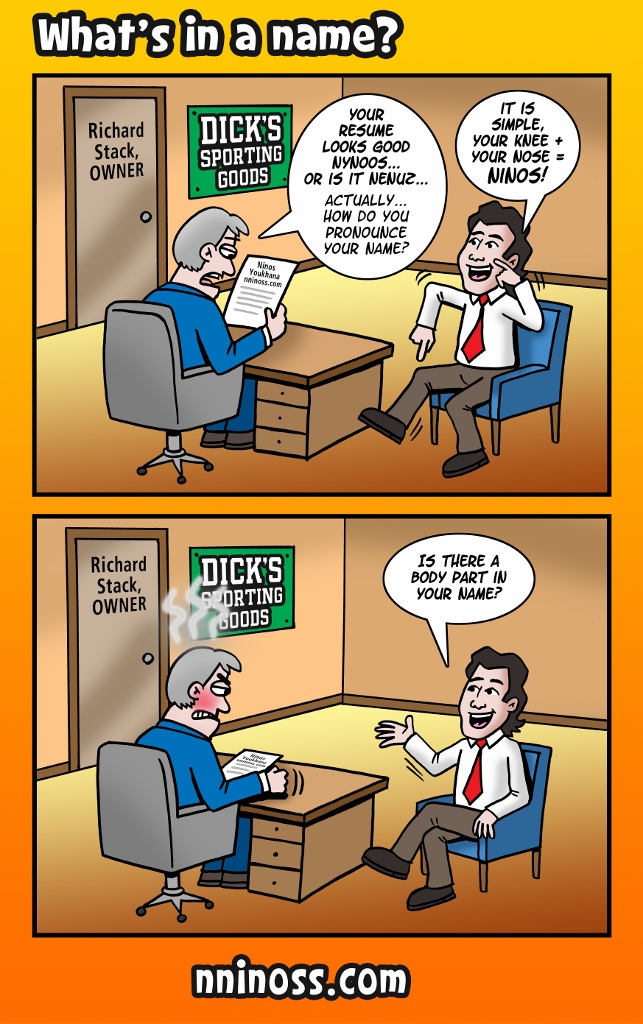
What’s in a name?
Isn’t time for the American names to get their share of the jokes?
 Ninos Youkhana