From One End to the Other

I am Christian Assyrian who was born in the city of Basrah, Iraq in 1976. I become an eye witness testimony to three wars in my life, so far. The war between Iraq and Iran started in 1980 and lasted eight years until 1988. The city was repeatedly bombed by Iran.

The Persian Gulf war (2 August 1990 -28 Feb 1991), was triggered by the invasion of Saddam’s forces of Kuwait. During that time, a war was waged by and led by United States against Iraq in response to the Iraq’s invasion. I witnessed that war. I still remember the sound of combat planes over Basrah. I still remember and saw how missiles launched from planes and hit their target. I still remember the low altitude Cruise missile hitting targets in Basrah. While I was witnessing the war and seeing the flying Apache and Black Hawk helicopters from the ground of Basrah and being considered an enemy, I had no idea what was in store of time for me in my future.

The universe works in a mysterious ways. After 15 years, on March 2003, Operation Iraqi Freedom started. In August 2005, I decided to go to Iraq as an interpreter for the U.S. Army. I was embedded in the very Army that invaded my previous country. I will be translating to the same Army; I was riding the same Black Hawk helicopters used to attack us. I was having discussion and eating lunch and dinner with the same U.S. Army colonels who became Generals who commanded the previous war. We were exchanging our memories from two different positions, while this time; we are sharing the same memories.

What a strange life!… Life will always move on, but history always repeats itself.

What is yours? Comments are welcome 🙂

How I Blew $100,000 On Travel…Without Any Regrets!

During 2005 and 2010, I worked as a contractor in Iraq, doing a range of jobs, such as Arabic Linguist and Iraqi Advisor. Working in Iraq allowed me to visit amazing places, meet wonderful people and expand my horizon. I was able to experience incredible places, which other people may only dream about, or see on TV. It was this enriching experience, which really ignited an irrepressible passion for travel inside of me. I will always look back on my time in Iraq with fond memories. I was glad that I had the chance to explore Iraq, but what I really wanted was to explore the world.

My desire to travel grew stronger every day and I longed to experience all the amazing places that I would see in books and on TV. However, as a Christian Assyrian with an Iraqi passport, it is almost impossible to secure a visa for the majority of the worlds’ countries. This restriction only spurred my passion and enthusiasm to travel and since then, I have made it my goal to see as much of the world as possible. But first, I would have to overcome the visa issues.

I remember my uncle came to visit us in Iraq, when I was just 15 years old. He lives in Chicago and has an American passport. I looked at his passport in awe (and jealousy). I desperately wanted my own little blue book, which would give me the freedom to explore the world. It is frustrating to think that where you are born dictates a lot of what you can do in your life. Just because I was born in Iraq, I was not allowed to visit other countries. Are they trying to tell me I’m a bad person, because of my place of birth? Are Americans all seen as ‘good’ people, just because of their place of birth too? It didn’t make sense.

There was nothing I could do to change world politics; however, there was something I could do that would allow me to travel. Ten years later, I would have my very own American passport and I would be a citizen of the United States of America. I made my dream come true, because of my passion and determination to travel.

My brand new American passport and citizenship represented a turning point in my life. I was now free to travel wherever I wanted. All because of this little blue book.

So…I traveled…a lot!

My recent world travels are some of the best times I’ve ever had. From the world’s highest building in Dubai to the world’s oldest tower in Pisa, Italy; I experienced it all and it felt great!

I visited some of the world’s most romantic places, such as the Eiffel Tower in Paris and the city of Rome (twice!), I partied on Bondi Beach in Sydney, Australia, I lived the life of the rich and famous in Cannes, Southern France (four times!) and I explored one of the world’s most fascinating cultures, in Cairo, Egypt. Everyday was different and unique. I was truly having the time of my life.

I remember spending ten amazing days on a first class Caribbean cruise with Carnival and enjoying the stunning views of the ocean from my balcony suite, as we floated between five tropical Caribbean islands. From my lavish Caribbean cruise to a shopping spree in the luxury malls of Dubai, I was living the life I had always dreamed about; the American Dream!

My travels were extravagant, to say the least. In Dubai, I stayed in the world’s most luxurious hotel, Burj Al Arab and ate at the world’s best Lebanese, French and Japanese restaurants. I shopped in huge malls for Gucci and Louis Vuitton and attended glamorous parties at the infamous Cavalli Club. I even visited the tallest building in the world Burj Khalifa. My glamorous lifestyle in Dubai continued for 30 days and will never regret spending so much money, because it was so worth it!

Of course, other special memories include spending time with friends and family. I spent two months in Germany with my beautiful girlfriend, traveling around Düsseldorf and visiting the stunning city of Cologne in the west of the country. From there I went to Sweden where I met some relatives, whom I had not seen in over 20 years! That was an amazing time for us all!

One month in Italy allowed me to explore some of the most beautiful landscapes in the world, where I traveled from Rome to the gorgeous island of Capri. I also visited the iconic areas of Portofino, Cinque Terre and the magnificent beaches of Forte dei Marmi, with their majestic view of the Italian Alps in the background.

Europe is definitely one of my favorite places in the world. The cities ooze elegance and old world charm, while remaining ultra modern and innovative. I felt so at home cruising the canals of Amsterdam; the world’s bicycle capital. I even felt at home walking the streets of the infamous Red Light District!

From the glamorous, star-studded beaches of Saint-Tropez, playing alongside the rich and famous in the Monte Carlo Casino and spending my evenings strolling through the streets of the beautiful cities of Nice and Cannes, I was always fortunate to be surrounded by beauty and great times, in my four amazing visits to France.

There were times when I asked myself, “Ninos, how did you end up here?” as I sat between the ultra rich and über famous at the Cannes International Yacht and Boat Show in September, or when I partied with celebrities and world famous DJ’s in Bouli night club.

I know I have been privileged in my life. I have traveled to some of the most spectacular locations on this planet and I do not regret spending so much money in order to have these life changing experiences.  I worked hard, for years, to obtain a US passport, so now I am simply making the most of it!

If I have the chance to travel again, of course I will. Travel teaches us about other cultures, traditions and ways of life. It introduces us to different ways of thinking and of being. I don’t believe in working for 40 years in the hope of being able to travel later in life. I believe in treating myself to ‘mini-retirements’ as often as possible. Why wait until retirement, when we don’t even know we will be around that long. Enjoy life now because as Mark Twain says, in one of my favorite travel quotes:

“Twenty years from now you will be more disappointed by the things that you didn’t do than by the ones you did do. So throw off the bowlines. Sail away from the safe harbor. Catch the trade winds in your sails. Explore. Dream. Discover.”

American Years

This year, I will be turning 18 years living in America. I would like to reflect on those challenging years in this blog. This led me to coin the concept “American Years”. It is driven by the question I am constantly asked: “How long have you been in America?” August 21, 2013 will be my 18th anniversary in America, so I will have 18 American Years and 18 non-American Years.

When you’re a grown man coming to the U.S., you again have to go through another period of “growing up”; this time into an American citizen instead of into a man. For me, growing up again made me a feel like being handicapped in a race against time and age; perpetually struggling to catch up to the other racers who were born in America.

For a very few, coming to America is easy, but for very majority of us, it was one of the greatest challenges of our lives. I still remember that KLM flight landing in Chicago airport back in August 1995. I remember that moment my family and I passed the immigration desk to the Land of Opportunity after having escaped Iraq. Coming to the Land of Opportunity gave me a strong desire to achieve a high standard of success and that belief anything was possible.

Making your way in America as an immigrant is hard enough, but starting a business in America is something else. Looking back to all the years of being in America since the day one, there are five main challenges I encountered as immigrant turned American entrepreneur:

Learning English: Learning English to the point where you can speak fluently and with the least accent possible was extremely difficult. I still remember what my cousin told me: “When you learn the language of this country, you will be able to hold it in your hand!” When I first came,  I was only able to answer 5 questions: “What is your name? How old are you? What is your address? What is your social security numbers? What is your phone number?” It took me about 5 years to start feeling comfortable in speaking English. Eventually, I became proficient enough to read and understand college textbooks.  While in college, I remember reading my books, highlighting words that I could not understand, and then looking them all up in the dictionary.  This process made the typical college homework an arduous task. Yet, the American born next you finishes a page in less than five minutes.  Or there are those people who make fun of the spelling mistakes in the papers you turn in.

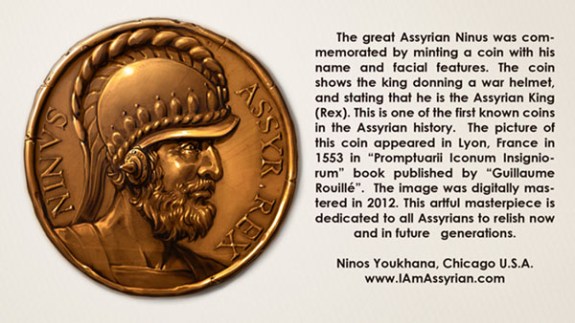
Work:  When I worked as a cashier, many customers were frustrated with me over my bad English.  I remember one time, when a customer waked in to the 7-11 store, and the first question he asked me was, “Do I speak English?” I replied in a funny way, saying, “No, English don’t not speak me”. During my university years, it was very hard to get an internship. After graduation, it became even harder when applying for a real job. Out of frustration, I became internally conflicted over changing my name from an immigrant sounding name to a more “white” name like John, or Mathew. I believed much of my difficulty in finding a job lay in potential employers disregarding my resume because of my foreign sounding name. Later, I would learn that other people, such as the authors of the book “Freakonomics”, validated this problem as an economic penalty paid by the bearers of foreign sounding names. Potential employers would often confuse the ethnic origins of my name, assuming either I was Greek, Japanese, or mixture of both, and then would become surprised when they met me faced to face for the interview.  I guess they never heard of Ninus, the great founder of the Mesopotamian city Nineveh. Also, many times during the interview I was asked if I have good communication skills. The paranoid side of me would always wonder “Is he asking me how my English is in an indirect way?”

Ninus Coin

Family and Social Burden: Like many Middle Eastern and Asian cultures, Assyrian culture tradition dictates that the oldest child will work and support his parents and his/her younger siblings. The oldest child often works forgoes college and finds a job as soon as possible, so he/she can supplement his parents’ income and support his/her younger siblings in affording a college education. I was doing the same. I was working to support myself while at the same time helping out my family with expenses and paying for my sisters’ education. My mother served about 30 years as a director of procurement and purchasing department in the Ministry of Oil. My father was elementary school teacher.  I am positive that if my parents worked same years in America, our financial situation would have been completely different.  But after coming to America, they had to start all over, but at least they had a chance to start over.

I hope these challenges can be used to help reflecting on the type of character and capabilities, and life challenges I went through. It is like graduating from Life University. Finally, I would like to ensure the reader that I am very happy and proud to be an American. I saw the difference in treatment and discrimination of my relatives in Sweden, France, Germany, Austria and Australia. I have been to those countries and saw how much worse the racism was there. For those of you who are born in America, companies, recruiters, or just normal people, I just wanted to share with you the challenges I overcame to get where I am in life. I ask you not to take anything for granted and appreciate even little things like your name 🙂


Pivoting Moment in Life

On the night of August 1, 2005, I was flying 3000 feet above Baghdad in a C-130 military aircraft preparing to land. It was dark and cold inside as the soldiers and I sat wedged together.  It made me feel like I was in one of those Hollywood movie actions about to start a major operation.  It was an action movie, but this time, it was different. This time, it was real.

Twenty years ago, this life was a distant dream for me. In 1993, my family and I were Iraqi refugees in Jordan waiting for my immigration visa to come to US.  My family and I waited in Jordan for eighteen months in order to receive our visas and another chance at life in America. After arriving in America I enrolled in and graduated from University of DePaul; earning a Bachelor of Science degree in Information Systems and a Master’s of Science Degree in Electronic Commerce. I graduated at the top of my class in both degree programs (3.75 GPA and 3.78 GPA, respectively). After college, in 2005, I started working for a very prestigious consulting company, Accenture; supporting one of their major clients, the Illinois Department of Employment Security (IDES).  I was working with a cutting-edge computer programming language called JAVA. Life was good. Also in 2005, I just bought my lovely car, a Lexus GS300 2002. Life was good and something I never could have imagined all those years ago. But I was not finished. My next goal was to start my own internet business.

Click on the photo for more images


In the middle of July 2005, I received a phone call asking me if I was ready to go and serve America. It was a recruiter for a linguist contracting company for the Department of Defense. Here, now, was one of life’s random opportunities that all depended on the decision I would make. It was one of the most difficult decisions to make in my life and would prove to be a major turning point.

At about 3AM, the C130 touched down Baghdad Airport in the pitch dark night. The C130 was descending vertically (a landing maneuver to ensure the safety of the plane from being shot by terrorists). As the plane corkscrewed down, a crew-member shouted while gesturing wildly, “Get ready, we are landing in Baghdad!”

We landed. As the back door of the plane opened, a new horizon emerged.  While I was walking behind all the soldiers and carrying three stuffed Army duffel bags, I kept thinking and asking myself endless questions: What did I do? Was it the right decision to make? Was I crazy to leave all the luxury I dream for in America years ago, yet to come back to same country that I escaped from? It was a moment that will stay with me for the rest of my life. It was a life changing experience. It was priceless.

I stayed working in Iraq until January of 2010. I hated some days, and others I loved every bit of. I did it to test every ounce of willpower. It feels like I went to heaven and hell, then back again. I had a whole new appreciation for the comforts of living in American.  I learned that showers and bathrooms are luxuries. I challenged every physical, mental, and emotional strength in my body. It was a completely new zone for me. It was a war, a civil war; filled with mortars, rockets, and road side bombs.

When I left Iraq and stopped working with the US Army, it symbolized the end of an era in my life. The memories and experiences of that place, working with US Generals who made history, the hardships, and the victories are the treasures I took with me when I left. It made me millionaire, but this time, not in sense of the startup that I dreamed of, but in the experiences that will never be recreated and will remain priceless.

Some time we need to pivot in life as opportunities present themselves to us and not get stuck in Plan A. Sometimes, we just need to put a good Plan A on pause. Random opportunities in life come in very few quantities.  And when we pivot to Plan B, it is not a defeat, but a means to change direction in order to take advantage of those random opportunities. I pivoted to Plan B and have never looked back.

For more photos click here http://www.flickr.com/photos/nninoss/sets/72157632699277222/show/

Please feel free to write me a comment below.

Currency for the Attention Based Economy

Social Currency

How great would it be to get paid every time you liked or followed a company on Facebook, Twitter, LinkedIn, etc.?

Businesses make money off of our time and attention due to advertising. Every time you like, follow, share a link, etc. relating to business, you are in effect advertising for that business. Those simple actions give businesses a better reputation, more links, positive reviews, traffic to their website, higher Google rankings, etc.

At the end of the day there is nothing free that still requires the human touch. But these businesses continue to gather publicity and exposure for free or be charged by a third party for them, i.e. Facebook and Twitter, all without compensating the people providing the actual likes, follows, and shares that generate that exposure.

Obviously, liking, following, and sharing have value for businesses, but what about the people actually doing the liking, sharing, and following?

Consider, for a moment, the following article by Herbert A. Simon, who talks about the attention economy in this frequently quoted paragraph:

“…in an information-rich world, the wealth of information means a dearth of something else: a scarcity of whatever it is that information consumes. What information consumes is rather obvious: it consumes the attention of its recipients. Hence a wealth of information creates a poverty of attention and a need to allocate that attention efficiently among the overabundance of information sources that might consume it”

Many new technologies are emerging that do just that: attempting to allocate attention more efficiently. Whether it’s Facebook’s new Social Graph, Yahoo’s proposed Interest Graph, or the  Google Social Graph API, companies are realizing its user’s attention is a finite resource that must be better managed.

The countless unpaid likes and comments we give one another every day are free. Since they are free to us, they have very little value in and of themselves, but to businesses they are worth their weight in virtual gold. These are currencies of the new Web World of reputation and attention. In this market, these currencies are measured in “eye balls”. These eye balls are manifested by social friends, connections, and followers.  They act like free gifts that play role in cementing our social connection. It gives social and emotional rewards.  These currencies grants us is respect, attention, expression and an audience. We measure our success not in dollars, but in the likes, comments we give away.

However, there are costs involved in this economy.  Economist labels it “Other Costs”, when they deal with things don’t fit the basic models of economy.  One of those is “opportunity costs”, the value of something else you might have done with the time you were at lunch.

Therefore, I created the following binary currency.  And, maybe it is time to start thinking charging people for likes and comments. Or it is time for us to get some royalties and commission from companies that will advertise to us products based on our Likes and sharing.  And, I don’t see an inflation to this currency.

Question: What if Facebook limited the amount of “Likes” per user? What will happen to like economy?

What do you think about Belua’s idea? Check this 2 min


thinkinG outsidE thE boX

Life_in_a_Box_-_final-hi-rez


The Query of You

Marissa Mayer, CEO of Yahoo, talked about the future of internet technology and search in Davos, Switzerland at the World Economic Forum.  She talked about the new technology that yahoo is going to implement in the next 3 to 5 years. It is called the “Interest Graph. Putting it in her words,” We think about how do we take the Internet and order it for you”. She also said, “In the future you become the query.

In short, Yahoo is going to organize the Web for me using the Interest Graph .

Your Wish Yahoo

I started to imagine myself living in a magic land with Aladdin and the Geni. However, this time I am Aladdin holding the magic lamp and Yahoo is the Jinni.  So now, Yahoo the Geni and is basically saying, “Abracadabra, you’re wish is my command.”

After all these years of collecting data on me, they will feed me back information that matters to me. This will happen according to Ms. Mayer in the next 3-5 years. Advances in the User Interface (UI) and the User Experience (UX) will push it to the next level.

But I am cautious, because what I see is a window dressing (new UI/UX) of the old pre-set preferences form by check boxes or Google alerts on steroids. I think we should be careful riding this new wave of UI/UX touches, popping bubbles, and swapping screens that may lead to derail focus from fundamentals and being cool becomes the new business model.  A teenager spends all his/her money on looking good.

I urge the startup people to be careful from the excitement of new technology in building something “Very Cool”, but the fundamentals are “Very Weak”. I see this happening with all these new startup companies I receive the beta invites for. I can’t believe until now, they are making Travel websites and travel Apps. Let me say this, I don’t care what your website and app will do or how will show me, I will not leave my Expedia unless you give me free ticket. I don’t care about features and coolness.

Just words of thought of my opinion!

Marketing Inspired by Pirates and Socrates

What are some uncommon methods for startups to use in order to penetrate the market?

In the market, the number of choices is approaching infinity, an exaggeration of market saturation pointed out by Seth Godin in his book “The Dip”.

A few days ago, I received an email from a new startup called Striking.ly. The mail title was: “Striking.ly Pro Goes Free” Striking.ly is offering 14 days Free Trials of Pro: version.  This has been the traditional strategy of an old business model called “Freemium”, a business model used to offer a free version and a paid version. “Freemium”, a term created by Jarid Lukin, was inspired by venture capitalist Fred Wilson, who proposed the marketing strategy in a 2006 blog post.

The 14 Day Free Pro version of Striking.ly and also the 30 day trial offer of Netflix got me thinking.  The thinking part was caused by an activated old neuron in my brain, which very rarely happens to me, and it took me back to 1998’s famous  article “The Bill & Warren Show” by Brent Schlender of Fortune Magazine. In the article, Bill Gates discussed the following concerning piracy of Microsoft products in China:

Although about three million computers get sold every year in China, people don’t pay for the software. Someday they will, though. And as long as they’re going to steal it, we want them to steal ours. They’ll get sort of addicted, and then we’ll somehow figure out how to collect sometime in the next decade.

Pirates

Gates’ main point was free, pirated versions of Microsoft products will lead to dependency, and that Microsoft will take advantage of that dependency to generate revenue at some point in the future. The dependency is further reinforced by the unique files and data generated by Microsoft products. Hence, I want to share my thought on this: I believe maybe it is time for startups to allow more time for trial or free use of the full/pro version of their products and move beyond the 14 or 30 day periods to longer periods such as two to four months. This will allow for greater time to build dependency on the product and make it more likely for users to purchase the product when the trial period is over.

Socrates

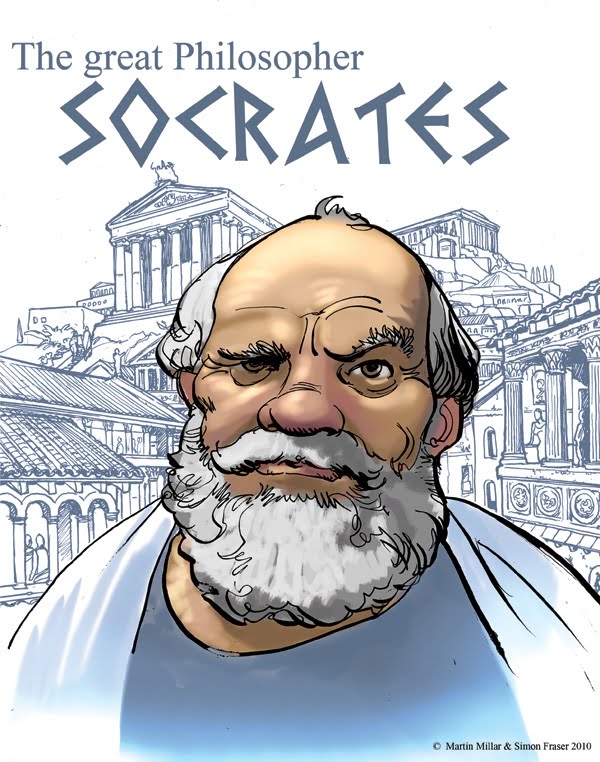
But with so many free programs available; ranging from free apps, to 14 day free trials, to 30 days of free movies, to free cars, to free health care software, maybe it is time for another new approach. The great philosopher Socrates used to pay people money to listen to him lecture. Taking a note from his page, startup companies looking to penetrate the market should consider paying new users money to try their product. In a world free programs and services, paying people to try use your product is a unique way of differentiating yourself from the competition and enticing new customers.

These just some thoughts I had. I would really appreciate it if you could offer your own insights on these two strategies. Pros/cons, risks vs. rewards, etc. Any comment is greatly appreciated.


Reaction to “The Dip” Book

I admire Seth for his books and insight on subjects. I read a few of his books: The Tribe, Unleashing the Ideavirus, Linchpin: Are You Indispensable? lastly, The Dip.

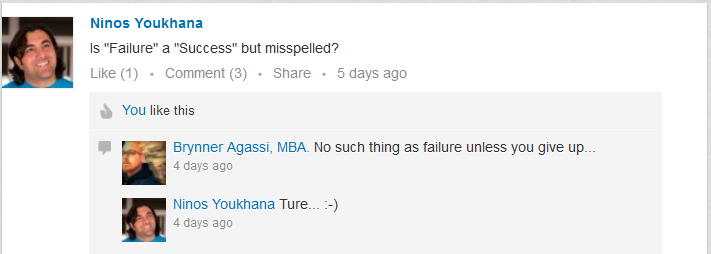
My initial reason to buy and read this book (let me say: I bought both versions Audible and iBook) was a post I shared on LinkedIn saying: “Is ‘Failure’ a ‘Success’ but misspelled?”

One of my connections on LinkedIn answered my post with: “No such thing as failure unless you give up.”

Dip

I started to wonder and try to find an answer and debunk such a thing called “Failure.” I wanted to know what other people think about this and their point of view. I turned to my favorite authors for an answer. Hence, The Dip is in my hand to read.

It took me 3 hours to read. I was trying to find, learn, understand, and look for exit strategies from a point of few for a startup in internet technology.

I understood his point of view on success and learned a few terminologies like: “The Dip”, The “CUL-De-SAC” which is a Dead End in French, and “The Cliff’ which I believe is a re-packaged version of what Daniel Kahneman calls “Loss Aversion Heuristic” that many people suffer from. You get roped in by small achievements and fear losing. Seth uses the example of cigarette smoking and how people get addicted to smoking and can’t quit.

Seth promotes the idea that success is to be number #1; citing, for example, our culture rewarding celebrities and superstars. The juicy share of the market belongs to the people at the top, in contrast to Christ Anderson’s book The Long Tail. His strategy in becoming #1 is to be a “Quitter of the wrong stuff.” You need to quit the stuff that makes you mediocre and wastes your time. He provides the example of Hannah Smith, a law clerk at the Supreme Court, which he calls her: “A very lucky woman…and She’s the best in the world” in page 8.  In page 15, he brings the example of an accountant who is good at driving and a decent golfer. He indicates the indirect way that you do not need such people.

I would like to write few words of disappointment against Seth’s point of view on success and philosophy. In short, he promotes the idea to be best in the world:

a) You have to quit what he calls, “Wrong Stuff”.

b) Focus on being the best in one thing only, because you don’t have time for other things.

c) Don’t be average because people don’t have time and don’t like to take risks.

My disappointment can be discovered on Page 33, where bluntly states, “Average is for losers”.

Reading that statement, it moved a strong feeling inside me to write this blog as an answer to his incorrect, weak philosophy. In short, I found that he uses what is called: “The Procrustes Bed,” a metaphor introduced by Nassim Nicholas Taleb in his bestselling book Antifragile.  A metaphor used to slice data and change variables to fit models and arguments that we understand to serve our benefit. For example, Seth gives an example of the accountant who spent time learning golf. He believes this is a waste of time, because the accountant is not striving to be the best in the world at it.

My question to him is: how about me? I am a programmer who is very good in JAVA, but average in JavaScript and like swimming? Am I a loser? Did I waste my time learning to be good in JavaScript and enjoying swimming?

Secondly, an answer to his strategy which is to be invests energy and be extremely good in only one and not be well rounded to what he calls it a “Biggest Mistake”. Does he realize that being extremely focused in one skill makes a person fragile? What happens tomorrow when JAVA is gone and a new programming language became popular? It happened to so many old programming languages. I recommend that Seth Godin read the Antifragile book.

As for wasting my time learning to swim because at best I will be a mediocre, how about so many people want to experience and learn new things for enjoyment and breaking boredom?  As I am sure in his great guy example of Hannah, I am sure he missed and sacrificed a lot of things in her life. Is she divorced, married very late, kids, missed her kids birthdays, thanksgiving, traveled, has a hobby?…and more….

Thirdly, his major argument for being anti-average is because people don’t have time and don’t like to take risks. He brings a strong example of a person being diagnosed with Cancer, a person visiting town looking for the best restaurant in town to eat. I was shocked! I thought to myself, is he serious? I am wondering does he live on what I call planet Earth? Or what is his zip code? Does he not know that some people can’t afford best doctors and not rich enough to eat in expensive restaurants? Hum, maybe can’t even stay in best hotels. I am wondering if he sees me coming out of an average hotel from the Cannes, France, will he think about me being a loser? I am sure he is rich to afford what he calls “Top Guy” on page 12 for a graphic designer to design his cover book.

If I am an average guy with average English yet sees and bring faults in your TOP arguments in your TOP writing book, then I feel good to know as an average guy feel that way. Yet, the TOP society of people wearing empty suits pays you so much money as I am sure you charge TOP fees for private consulting.

At the end, maybe being average is not a bad thing; it gives me leverage to do other things and makes me antifragile, and a success of being on Top of the tail is just a matter of skills and random act of luck.

Twitter, LinkedIn, YouTube, Facebook Addiction

Twitter, LinkedIn, YouTube, Facebook Addiction